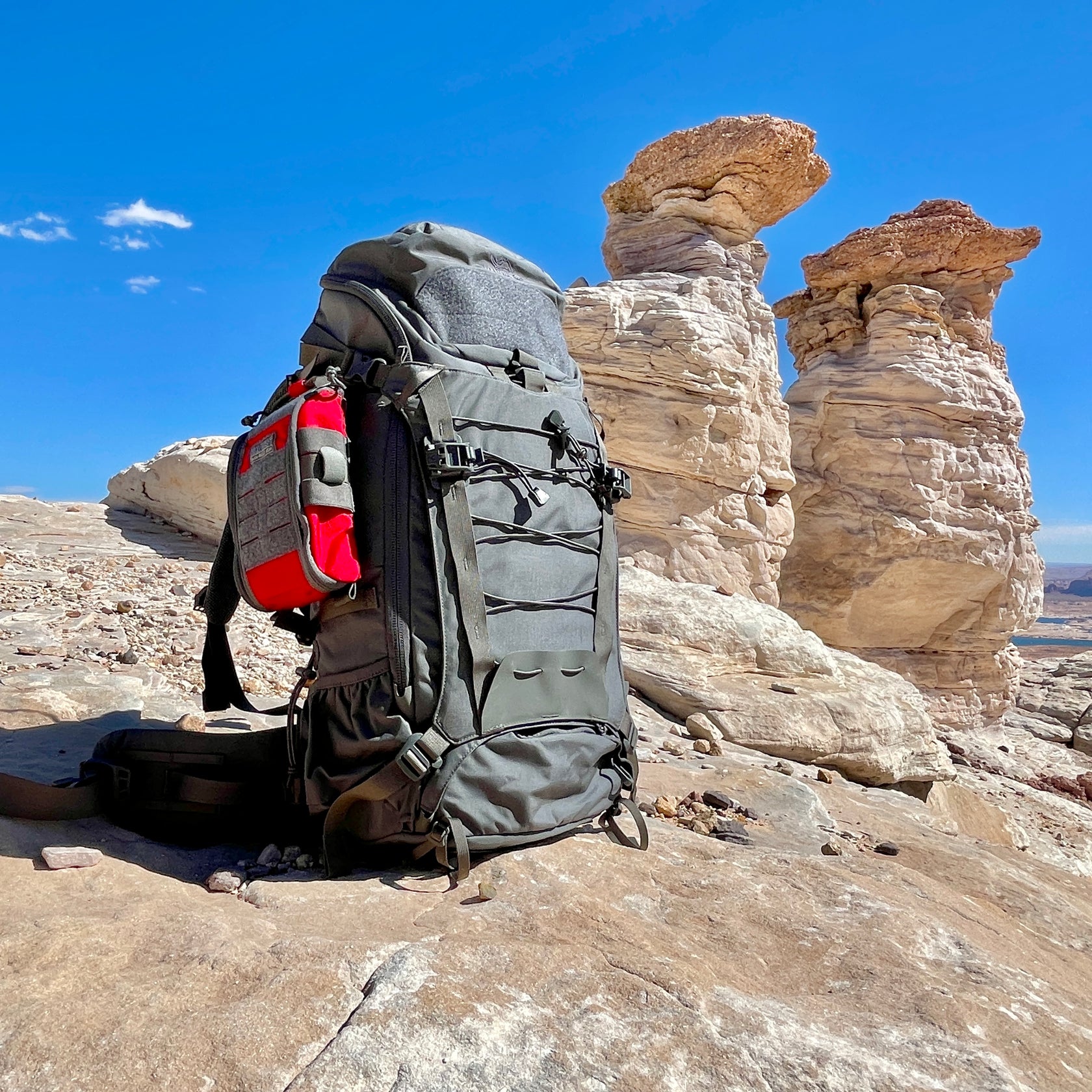


Your vehicle is where you are most likely to encounter serious trauma. Not the backcountry, not a mass-casualty event — the road. More than 40,000 people die in motor vehicle crashes in the United States every year, and millions more are injured. If you drive daily, commute with your family, run a work truck, or point a built rig down a forest service road, the single most important piece of emergency equipment you can add to that vehicle is real medical capability — and the knowledge to use it.
This guide is the hub for everything vehicle medical preparedness at Urban Medical Gear: why a glovebox full of adhesive bandages is not a plan, how heat and staging affect your supplies, and how to build the right setup for a daily driver, a work truck, an overland rig, or a motorcycle. Where a topic deserves its own deep dive — like choosing the specific kit — we link you to it.
Why Your Vehicle Needs Real Trauma Capability
Most drugstore first aid kits are built for paper cuts and blisters. Vehicle crashes produce a different injury profile: severe bleeding, penetrating trauma from glass and metal, crush injuries, chest trauma from steering wheels and seatbelts, and fractures. Uncontrolled hemorrhage is one of the leading causes of preventable death after trauma, and a person can bleed out from a major arterial injury in a matter of minutes — often faster than any ambulance can arrive.
That response gap is the core argument for vehicle trauma gear. Urban EMS response takes several minutes on a good day; rural response times stretch far longer, and on remote overland routes you may be hours from the nearest paramedic. Whoever is standing at the crash site in the first five minutes is the real first responder — and statistically, that person is not wearing a uniform. It might be you, coming upon someone else's worst day. It might be a stranger, coming upon yours.
A vehicle medical setup worth carrying has to be able to do three things a pharmacy kit cannot:
- Stop massive bleeding — a windlass tourniquet like the CAT Gen-7, pressure dressings, and wound packing gauze.
- Manage chest injuries — vented chest seals for penetrating chest trauma.
- Support the basics — gloves for scene safety, trauma shears to expose injuries, a rescue blanket to fight shock and exposure.
Everything else — the boo-boo layer of bandages, wraps, and wipes — belongs in the kit too. But the trauma layer is what buys minutes when minutes are the whole game. If you want the full framework for evaluating and choosing a specific kit, read our companion deep dive: the vehicle first aid kit buying guide for car, truck, and overland.
Staging and Heat: Where Your Kit Lives Matters
The interior of a parked car in summer sun can exceed 140°F, and enclosed cargo areas can run hotter. That thermal cycling — baking all day, cooling all night, hundreds of times a year — is brutal on medical supplies. Before you decide what to carry, decide where it will live and how you will protect it.
Heat degrades vehicle medical gear in predictable ways:
- Adhesives fail first. Chest seals, adhesive bandages, and medical tape rely on aggressive adhesives that soften, migrate, and lose tack with repeated heat cycles. A chest seal that won't stick is dead weight.
- Elastic components fatigue. Compression wraps and the elastic in pressure dressings lose recoil over time in high heat.
- Packaging breaks down. Sterile packaging can become brittle and crack, compromising sterility long before the printed expiration date.
- Medications degrade fastest of all. Any over-the-counter comfort medications you stage in a vehicle should be treated as short-lived consumables and rotated frequently.
Practical staging rules: keep the kit out of direct sunlight (under a seat, in a seat-back organizer, or in a cargo cubby), in a zippered pouch that shields contents from UV and dust, and inspect vehicle-staged supplies more often than gear that lives indoors — every oil change or seasonal tire swap is a natural interval.
Accessibility is the other half of staging. A kit buried under recovery gear is functionally not in the vehicle when you're pinned in the driver's seat. The trauma layer — tourniquet, packing gauze, pressure dressing — should be reachable from the driver's seat or within seconds of exiting. Many drivers stage a tourniquet forward (console, door pocket, or a headrest-mounted tourniquet holder) and the full kit within arm's reach behind them.
The Daily Driver Setup

For a commuter car, the goal is a compact, complete kit that covers both the trauma layer and everyday injuries without eating cargo space. This is the setup for school runs, commutes, and errands — the driving that makes up most of your miles and therefore most of your risk exposure.
A solid daily driver loadout looks like this:
- One stocked trauma/first aid kit, staged within reach. The AID-PAK Gen-2 was purpose-built for exactly this role: a vehicle-friendly footprint with a real trauma layer plus boo-boo supplies, in a pouch that opens flat so you can see everything under stress.
- A dedicated tourniquet staged forward, separate from the kit, so the fastest intervention is also the fastest to reach.
- Nitrile gloves in multiples — gloves tear, and you may have more than one casualty.
- A rescue blanket for shock management and cold-weather breakdowns alike.
If you already carry an IFAK on your belt or bag, don't let it double as the car kit — gear that leaves the vehicle with you is gear that isn't there when someone else needs it. The vehicle kit stays with the vehicle, full stop.
Truck, Fleet, and Overland Setups

Trucks, work vehicles, and overland rigs justify more capability for three reasons: more space, more risk (job sites, winches, recovery straps, chainsaws, remote terrain), and longer distances from help. This is where you scale from "one compact kit" to a layered system.
Work trucks and fleet vehicles
Fleet and job-site vehicles should carry a kit sized to the crew, not the vehicle — two workers means the realistic possibility of two casualties. Mount the kit visibly and consistently across the fleet (same location in every truck), label it, and put someone's name on a restock schedule. A high-capacity bag like the FATPack-PRO Large carries enough depth for multiple bleeding interventions and doubles as a grab-and-go bag for incidents away from the vehicle.
Overland and off-road rigs
Overland travel changes the math: you are deliberately driving away from EMS coverage, often with no cell signal, on terrain that produces rollovers, recovery accidents, burns, and lacerations. Your medical system needs to assume that you are the definitive care for hours, not minutes.
The overland layering that works:
- Primary trauma kit, vehicle-mounted and reachable. The TRK-1 Trail Response Kit was designed for this exact use case — a compact, trail-oriented trauma and first aid kit that covers bleeding control, wound care, and the injuries that actually happen on remote routes.
- A grab-and-go bag for injuries away from the rig — the hike to a viewpoint, the recovery scene fifty yards back down the trail. A tear-away or MOLLE-mounted pouch means you take the medical capability to the casualty instead of dragging the casualty to the truck.
- Depth of consumables. Extra packing gauze, extra pressure dressings, extra gloves. On a multi-day route you cannot restock after the first incident, and the second incident does not care that you already used your only tourniquet.
- Communication as a medical tool. A satellite communicator does not stop bleeding, but it starts the evacuation clock hours earlier. Treat it as part of the medical plan.
Group travel multiplies this: standardize where each rig carries its kit and brief it at the trailhead — thirty seconds of "med kit is behind the driver's seat" is the cheapest insurance in overlanding.
Motorcycle Minimal Carry
Riders face the highest injury exposure per mile of anyone on the road and have the least space to work with. The motorcycle answer is ruthless prioritization: carry only what addresses the deadliest, most time-critical injuries.
A realistic rider loadout fits in a tank bag, tail bag, or a compact waist pack like the DENDRITE-SMALL:
- One windlass tourniquet — rated, not improvised
- One package of wound packing gauze
- One compact pressure dressing, like a 4" emergency trauma dressing
- One pair of gloves and a compact pair of shears
- A vented chest seal if space allows
Carry it on the bike or on your body — not in luggage that separates in a crash — and tell your riding group where it is. In a rider-down scenario, your kit is most likely to be used on you, by someone else.
Roadside Scene Safety: Don't Become the Second Casualty
Medical gear is useless if the rescuer gets hit. Struck-by incidents kill responders — including trained professionals — every year, and a civilian stopping to help has none of a fire crew's blocking apparatus or scene lighting. Before any medicine happens, the scene has to be survivable:
- Park defensively. Position your vehicle behind the crash, hazards on, wheels angled so that if it's struck it deflects away from the scene, and leave yourself an escape path.
- Be seen. Reflective triangles or flares placed well upstream of the scene buy reaction time from oncoming traffic. At night, a headlamp beats a handheld light because it frees both hands.
- Call before you treat. Get 911 rolling with a precise location — mile markers, exit numbers, GPS coordinates from your phone — before your hands are covered in blood.
- Move casualties only when the scene demands it. Fire, traffic exposure, or a vehicle in a dangerous position can force a rapid move; otherwise, minimize spinal manipulation and treat where they lie.
- Gloves on, every time. Bloodborne pathogen protection is non-negotiable when treating strangers.
Scene safety is a skills problem more than a gear problem, which is why it features heavily in the courses we recommend on our education page.
Family and Passenger Considerations
A family vehicle kit has two extra jobs. First, it needs to serve small patients: pediatric-sized wound care, comfort items, and the awareness that a standard adult tourniquet may not be appropriate for very small limbs — direct pressure and wound packing become even more important. Second, it needs to be usable by your passengers when you are the casualty. That means:
- Everyone who rides regularly knows where the kit is and can reach it — including from the back seat.
- The kit is organized for a stranger. Clear layout, visible labeling, and a quick-reference card like the M.A.R.C.H. cards turn a bag of supplies into a guided sequence for a rattled spouse or teen.
- Teens get trained. A new driver is statistically your highest-risk family member. A Stop the Bleed class is a better sixteenth-birthday gift than a phone mount.
- Comfort supplies earn their space. Motion sickness, minor burns from hot hardware, splinters, scraped knees at the rest stop — the boo-boo layer keeps small problems from derailing trips and keeps the family fluent in opening and using the kit.
Restocking, Expiration, and Kit Maintenance

A vehicle kit is not a buy-once item; it's a system on a maintenance schedule, living in the harshest storage environment you own. Build the habit:
- Inspect on a trigger you already keep — every oil change, every seasonal tire swap, or the first of every quarter. Look for cooked adhesives, brittle packaging, compromised sterile wrappers, and anything past date.
- Replace what you use immediately. The most common failure mode of a real-world kit is the gauze that got used on a trailhead scrape six months ago and never got replaced. Restock components like chest seals, dressings, and gauze are available individually in our restock and refills collection, and the UMG Fill-PAK rebuilds an entire kit's contents in one order.
- Rotate heat-sensitive items forward. When vehicle-staged supplies approach date, rotate them to training use — expired gauze and dressings are perfect for practice — and stage fresh stock in the vehicle.
- Train with your tourniquet, but never stage a trainer as your live TQ. Mark trainers clearly and keep them out of the vehicle kit.
Expiration dates on trauma gear are mostly about sterility and material integrity, and vehicle heat shortens real-world life below the printed date. When in doubt, replace it — the cost of a fresh pressure dressing is trivial against the job you're asking it to do.
Training: The Multiplier on Everything Above
Gear without training is a donation to whoever shows up knowing how to use it. The good news: the core lifesaving skills take hours, not years.
- Stop the Bleed — a short, inexpensive, nationally available course covering tourniquets, wound packing, and pressure. This is the single highest-value afternoon in preparedness.
- CPR/AED and basic first aid — cardiac events happen in cars and at rest stops, too.
- Wilderness or remote first aid — the right next step for overlanders, covering extended-care decisions when EMS is hours away.
Then rehearse with your actual setup: can you reach your tourniquet from the driver's seat, belted, with your eyes closed? Can your spouse find the chest seals? Ten-minute driveway drills surface staging problems that look fine on paper. For course guidance and skill-building resources, start with our education hub.
Building Your Setup: Where to Go From Here
If you're ready to equip a vehicle, work through it in this order:
- Pick the kit. Read the vehicle first aid kit buying guide for a deep dive, or compare loadouts side by side on the UMG kits comparison chart. Browse everything vehicle-ready in the Vehicle & Home collection and stocked kits collection.
- Stage it using the heat and accessibility rules above, with the tourniquet forward.
- Train on it, and put the restock check on your maintenance calendar.
| Vehicle | Recommended base | Key additions |
|---|---|---|
| Daily driver / commuter | AID-PAK Gen-2 | Forward-staged CAT Gen-7, rescue blanket |
| Family SUV / road trips | UMG Advanced IFAK or AID-PAK | Boo-boo depth, M.A.R.C.H. cards, teen training |
| Work truck / fleet | FATPack-PRO Large | Crew-sized consumable depth, fixed mounting point |
| Overland rig | TRK-1 Trail Response Kit | Grab-and-go pouch, extra gauze/dressings, satellite comms |
| Motorcycle | DENDRITE-SMALL loaded minimal | TQ + gauze + 4" ETD on body or bike |
Frequently Asked Questions
Is it legal to carry and use a tourniquet on someone else?
Carrying trauma supplies is legal everywhere in the U.S. Good Samaritan laws in all 50 states generally protect bystanders who render reasonable aid in good faith during an emergency, though specifics vary by state. Training strengthens both your effectiveness and your legal footing — act within what you've been taught.
Where is the best place to keep a first aid kit in a car?
Out of direct sunlight and reachable from a seated position — under a front seat, in a seat-back organizer, or in a console-adjacent cubby. Stage your tourniquet separately and even closer, such as the center console or door pocket. The trunk is acceptable only for overflow supplies, never for the trauma layer.
How often should I replace the supplies in my vehicle kit?
Inspect quarterly or at every oil change. Vehicle heat shortens the usable life of adhesive items (chest seals, tape, bandages) and elastic items below their printed dates, so replace anything that looks cooked, brittle, or compromised — and replace used items immediately from the restock collection.
Do I really need a tourniquet for a car kit, or is that overkill?
A tourniquet is the single most decisive tool for the deadliest survivable injury in a crash: massive limb hemorrhage. Extremity injuries from glass, metal, and crush mechanisms are common in collisions, and a bleed that empties a femoral artery won't wait for EMS. A rated windlass tourniquet like the CAT Gen-7 costs less than a tank of gas.
What's the difference between a car first aid kit and an IFAK?
An IFAK (Individual First Aid Kit) is a trauma-focused kit built around bleeding control for one casualty. A complete vehicle kit combines that trauma capability with a broader first aid layer — wound care, wraps, comfort items — sized for multiple passengers. Our comparison chart shows exactly what each UMG kit contains.
Related Reading
- Vehicle First Aid Kit Guide: Car, Truck & Overland — the kit-buying deep dive
- Trauma First Aid & Bleeding Control Guide — the skills behind the gear
- UMG Kits Comparison Chart — every kit, side by side
- Education Hub — training resources and course guidance
Disclaimer: This article is for educational purposes only and is not a substitute for professional medical care or certified training. Seek qualified instruction (e.g., Stop the Bleed, TCCC) before relying on any trauma equipment.
Mentioned in this article
More stories