

Most people will witness or be involved in a serious crash at some point, and the minutes before EMS arrives are the ones that matter most. You don't need to be a paramedic — you need a clear head and a short list of priorities. This guide walks through those first minutes in order, from making the scene safe to controlling bleeding. It's part of our complete vehicle medical preparedness guide.
Step 1: Don't become the second victim
Scene safety comes before patient care — always. Pull over completely, put on your hazards, and park where you won't be hit. Watch for traffic, fuel, broken glass, and downed power lines. If it's dark or on a highway, make yourself visible and set out reflective markers if you have them. A rescuer who gets struck just doubled the number of patients.
Step 2: Call 911 early and give the right information
Call as soon as the scene is safe — don't wait until you've assessed everyone. Dispatchers need, in order: your exact location (mile marker, cross street, direction of travel), the number of vehicles and people involved, whether anyone is trapped or unconscious, and any hazards like fire or fuel. Put the phone on speaker so you can work while you talk, and don't hang up until they tell you to.
Step 3: Should you move the injured person?
Usually, no. If someone is conscious and breathing inside the vehicle, leave them in place to protect the spine, calm them, and wait for EMS. There are only a few reasons to move someone immediately:
- Fire or immediate risk of fire
- The vehicle is in water or actively unstable
- They aren't breathing and you can't help them where they are
If you must move them, use a firm, quick drag along the long axis of the body to keep the head, neck, and spine as aligned as possible. The risk of moving is real, so only do it when staying put is more dangerous.
Step 4: Check responsiveness and breathing
Talk to the person. If they respond and are breathing, reassure them and keep monitoring. If they're unresponsive but breathing, protect the airway. If they're not breathing, that's a cue to begin CPR (if trained) and tell 911 immediately — they can coach you through hands-only compressions.
Step 5: Control life-threatening bleeding
After breathing, bleeding is the biggest killer you can actually do something about. Look for spurting or pooling blood. Apply firm direct pressure with gauze or the cleanest cloth available. For a limb bleeding uncontrollably, a tourniquet placed high and tight is the fastest fix — see how to apply a tourniquet in under 30 seconds. Wear gloves whenever you can; roadside scenes are messy.

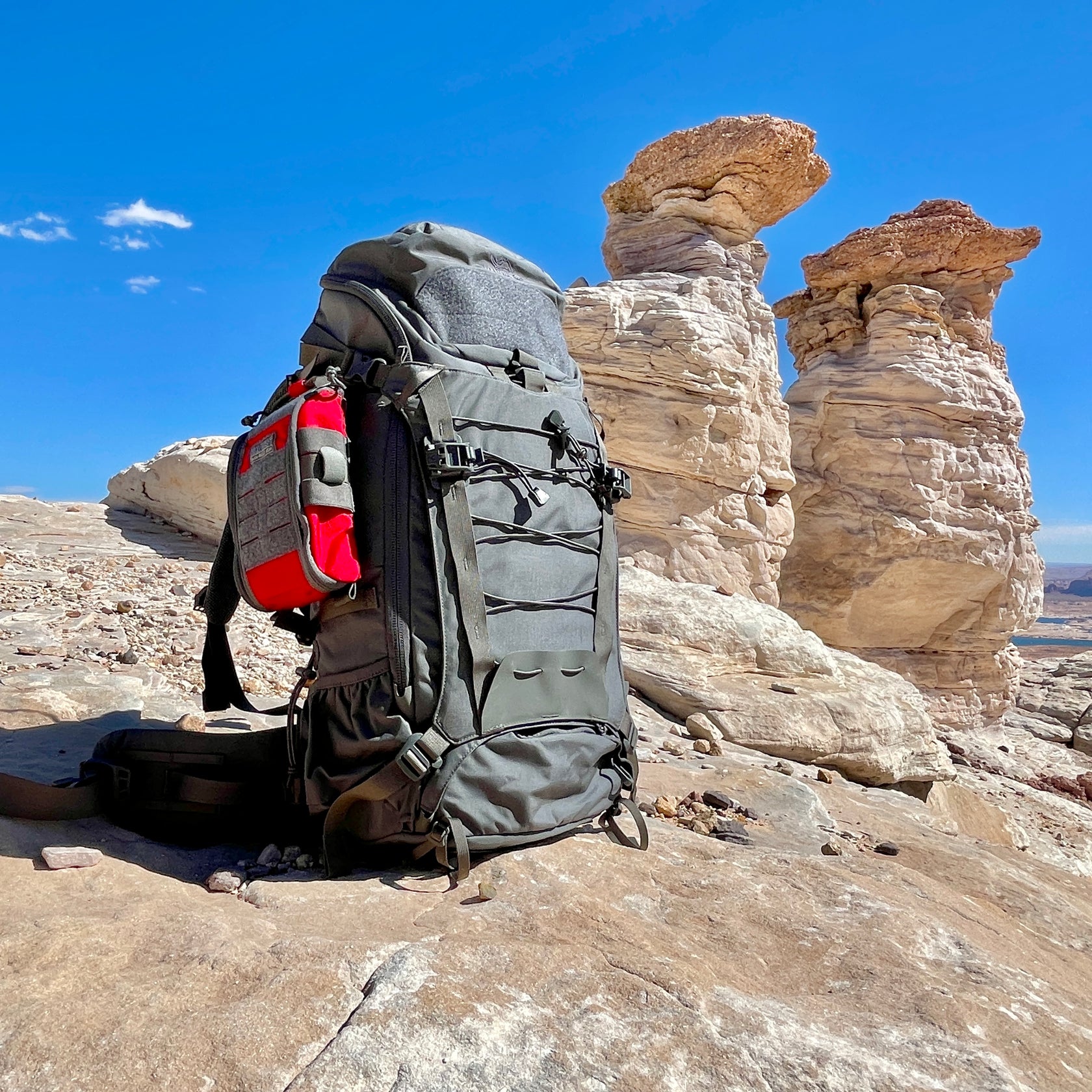
This is where a dedicated vehicle trauma kit earns its keep. The TRK-1 (Trail Response Kit) keeps a tourniquet, gauze, gloves, and dressings in one grab-and-go package under your seat — far more useful in a crash than a box of adhesive bandages. Read why in our TRK-1 breakdown.
Step 6: Treat for shock and keep them warm
After bleeding is controlled, a crash victim can slip into shock. Keep them still, reassure them, and cover them with a blanket or jacket — even in warm weather — since injured bodies lose heat fast. Don't give food or water in case they need surgery.
What not to do
- Don't remove a motorcyclist's helmet unless they aren't breathing and you can't manage the airway otherwise.
- Don't remove impaled objects — stabilize them in place.
- Don't move a conscious, breathing person without a life-threatening reason.
- Don't crowd the scene or block access for arriving EMS.
Frequently asked questions
Am I legally protected if I help at a crash?
Most U.S. states have Good Samaritan laws that protect bystanders acting in good faith within their training. Do what's reasonable, don't accept payment, and don't abandon care once you start.
Should I pull someone out of a car after a crash?
Only for fire, water, or a vehicle that's actively unstable — or if they aren't breathing and you can't help them inside. Otherwise, keep them still to protect the spine and wait for EMS.
What's the most important thing to have in the car?
A real trauma kit with a tourniquet and gauze, plus gloves — and the knowledge to use them. A basic “boo-boo” kit won't stop a serious bleed.
What if there are multiple injured people?
Treat the quiet, still ones as potentially most serious after you've addressed anyone with obvious major bleeding. Tell 911 how many patients there are so they send enough units.
Do I need training to help?
Basic bleeding control and hands-only CPR can be learned in a couple of hours and make you genuinely useful. See our education and training resources.
Start here: Crash response is one piece of being ready on the road. For kit choices, mounting, and storage, read our complete vehicle medical preparedness guide.
Disclaimer: This article is for educational purposes only and is not a substitute for professional medical care or certified training. Seek qualified instruction (e.g., Stop the Bleed, TCCC) before relying on any trauma equipment.
Find similar articles:
bleeding control bystander first aid car accident first aid crash response scene safety TRK-1 vehicle first aid