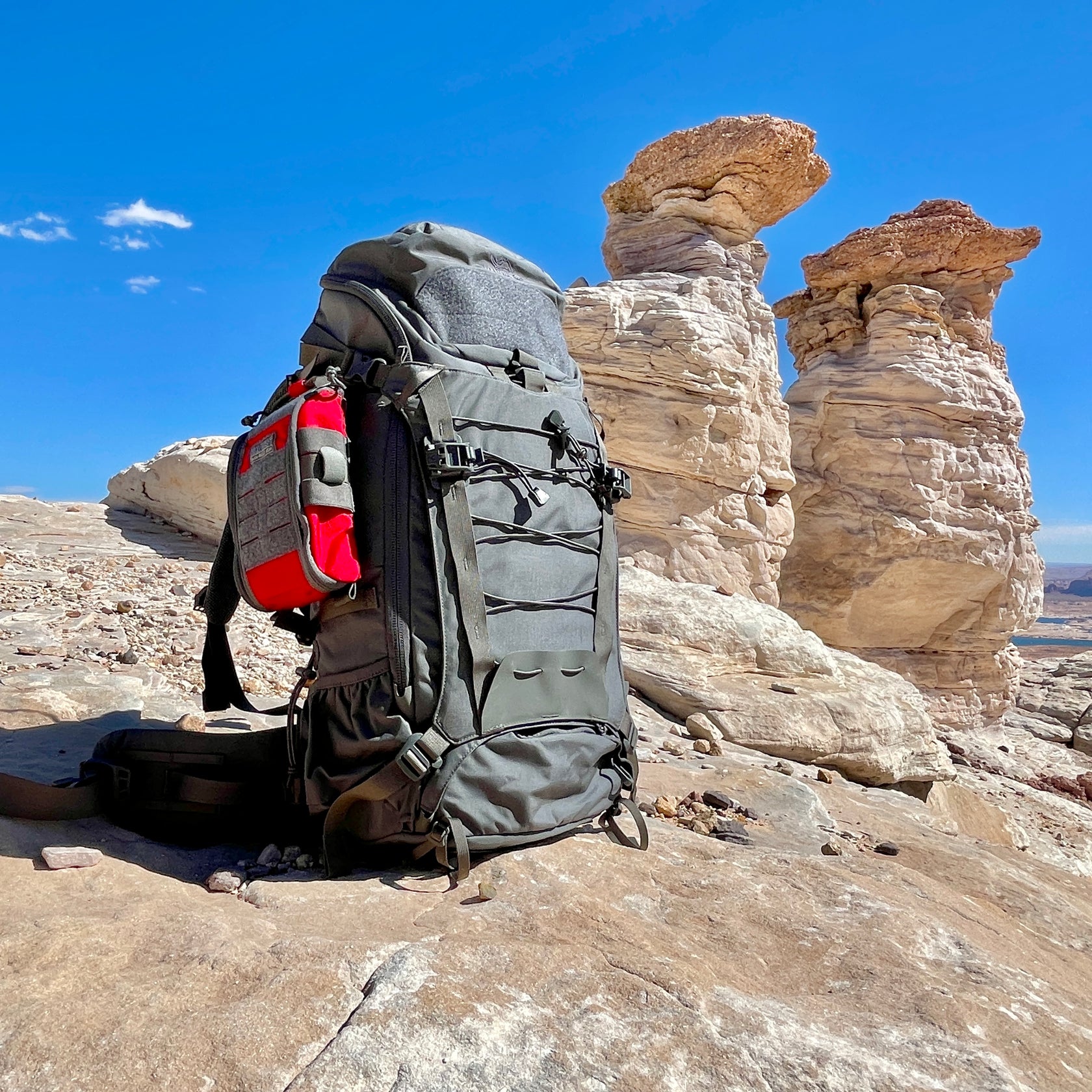


Search for a "first aid kit" and you'll find everything from a pouch of adhesive bandages to a full trauma bag. The term IFAK — Individual First Aid Kit — came from the military, and it means something specific: a compact kit built to treat life-threatening injuries, not everyday scrapes. Understanding the difference is the single most important step in buying the right kit.
A First Aid Kit Treats Discomfort. An IFAK Treats Threats to Life.
A traditional first aid kit handles the small stuff: cuts, blisters, headaches, insect stings. Useful — but none of those will kill you in five minutes. An IFAK is organized around the injuries that can: massive hemorrhage, airway compromise, and chest trauma. That's why a real IFAK is built around the MARCH protocol — Massive hemorrhage, Airway, Respiration, Circulation, Hypothermia — the same assessment order taught in Tactical Combat Casualty Care (TCCC).
Put another way: a first aid kit buys comfort, an IFAK buys time. A severed artery can be fatal in three to five minutes, while average EMS response runs longer than that almost everywhere. The IFAK exists to bridge that gap. For the full backstory on where the IFAK came from, read What Is an IFAK?
Side by Side: What's Actually in Each
| First Aid Kit | IFAK | |
|---|---|---|
| Job | Comfort and minor wound care | Stop death from bleeding, chest trauma, airway loss |
| Core contents | Adhesive bandages, antiseptic wipes, tape, gauze pads, OTC meds, tweezers, cold pack | Tourniquet, hemostatic or compressed gauze, pressure dressing, chest seals, gloves, shears |
| Time pressure | Minutes to hours — nothing is urgent | Seconds to minutes — every fumble costs blood |
| How it's used | Rummage until you find the right size bandage | One-handed, under stress, in a known layout |
| Where it lives | Bathroom cabinet, kitchen drawer, trunk | On your body, belt, or mounted within arm's reach |
What Belongs in a True IFAK
- Tourniquet — a proven windlass design like the CAT Gen-7, the standard issued across the U.S. military.
- Hemostatic or compressed gauze for wound packing.
- Pressure dressing — a flat-packed emergency trauma dressing.
- Chest seals — vented twin packs like HyFin Vent Compact for penetrating chest injuries.
- Gloves and shears — protect yourself first, expose the injury fast.
Two Scenarios That Show the Difference
The kitchen cut. You slice a finger dicing onions. It bleeds, it stings, it's messy — and it's a first aid kit problem: rinse, antiseptic wipe, adhesive bandage, done. Reaching for a tourniquet here would be absurd. This is 99% of what most households ever face, and a boo-boo kit handles it perfectly.
The range accident. A round fragments off steel and catches your buddy in the thigh. Bright red blood is pulsing through his pants. Nothing in a drugstore kit touches this — you need a tourniquet high and tight in under a minute, then packed gauze and a pressure dressing while someone calls 911. That's the IFAK's entire reason for existing, and it's why the tourniquet rides in an outer pocket instead of under a stack of bandages.
Same word — "first aid" — two completely different problems, and the gear for one is nearly useless for the other.
Which Should You Carry?
Both — matched to your situation. The kits do different jobs, and neither substitutes for the other. Keep a boo-boo kit for daily life, and stage trauma capability where severe injury is plausible:
- Everyday carry: a slim kit like the Pocket ACE IFAK rides in a cargo pocket or bag. See our EDC kit guide if you carry concealed.
- Range, trail, or work: a belt- or MOLLE-mounted kit from our compact kits collection — the AID-PAK Gen-2 is our most popular all-around build.
- Vehicle and home: step up in capability with our vehicle & home kits, or the flagship TRK-1 Trail Response Kit.
Placement Is Part of the Difference
A first aid kit can live wherever it's convenient — a drawer, a cabinet, the trunk. An IFAK can't. If severe bleeding starts, you have seconds to lay hands on it, possibly with one arm out of commission. That drives three placement rules: keep it in the same spot every time so your hands can find it without your eyes; keep the tourniquet outermost and staged for a one-hand draw; and never bury trauma gear underneath boo-boo supplies. Many of our customers run a two-pouch split — comfort items in one, trauma in the other — so a bee sting never means digging past chest seals.
The Cost Reality
A decent boo-boo kit costs $15–30, and refills are pennies. A legitimate IFAK runs more — a genuine CAT Gen-7 alone is around $30, and a complete kit with hemostatic gauze, a pressure dressing, and chest seals typically lands between $80 and $200 depending on the pouch. That gap tempts people toward bargain "tactical trauma kits" stuffed with counterfeit tourniquets and off-brand seals. Don't. The IFAK is the kit whose failure costs a life; it's the one place to buy proven gear from an authorized dealer.
The Upgrade Path
Already own a first aid kit? You don't need to throw it out — you need to add the trauma layer. The UMG Fill-PAK IFAK Kit drops MARCH-organized trauma contents into a pouch you already own, or you can grab a complete, ready-to-carry build from our stocked kits collection. Not sure where to start? The UMG kits comparison chart lays out every build side by side, and our Build-My-IFAK tool lets you configure a kit à la carte.
Gear Is Half the Answer — Training Is the Other Half
A tourniquet you don't know how to apply is just expensive nylon. Take a free Stop the Bleed course, and browse our education & training resources for TCCC references and video walk-throughs.
Disclaimer: This article is for educational purposes only and is not a substitute for professional medical care or certified training. Seek qualified instruction (e.g., Stop the Bleed, TCCC) before relying on any trauma equipment.
Mentioned in this article
More stories

Vehicle First Aid Kit Guide: What to Keep in Your Car, Truck, or Overland Rig