

The Combat Application Tourniquet (CAT) Gen-7 by North American Rescue is the most widely fielded tourniquet in the world — standard issue across the U.S. military and the benchmark against which every other windlass tourniquet is measured. But owning one isn't the same as being able to deploy it in the dark, under stress, with one hand. This guide covers the three things that matter after the purchase: staging, carry, and training.
1. Stage It for One-Handed Deployment
A CAT that's still in shrink-wrap at the bottom of a bag might as well be at home. "Staging" means preparing the tourniquet so it can be applied — including to yourself, with one hand — in seconds. The red tip is your index point: staged correctly, you grab the red tip, pull the loop over the limb, and cinch, with no re-threading and no fumbling under adrenaline:
- Remove all packaging and the paper band label.
- Re-thread the band so the free-running end is ready to pull — most users stage with the band fed through the buckle, leaving a large loop you can pass over an arm or leg. The Gen-7's single-routing buckle makes this the fastest configuration for self-application.
- Fold the excess band flat and secure the windlass in its clip so nothing snags on the draw. The red tip should sit where your fingers land first.
- Rehearse the draw from wherever it's carried. Staging isn't done until the pull-out is smooth from its actual carry position, not just off a table.
Every UMG pre-built kit — from the AID-PAK Gen-2 to the TRK-1 — reserves an outer position for the tourniquet precisely because it's the first item you'll reach for under the MARCH protocol (M = massive hemorrhage comes first).
2. Carry It Where Your Hands Can Find It
Speed of access beats concealment. Proven carry positions:
- Dedicated holder: a TQ-1 tourniquet holder or elastic TQ holder mounts to a belt, pack strap, or MOLLE field and keeps the CAT indexed in the same spot every time. Belt-line carry at the support-side hip is the classic setup: reachable by either hand.
- Ankle carry: popular with law enforcement and anyone whose beltline is already crowded. An ankle rig keeps the TQ on-body even when you shed a jacket or pack — just train the draw, because it's a different motion than a belt pull.
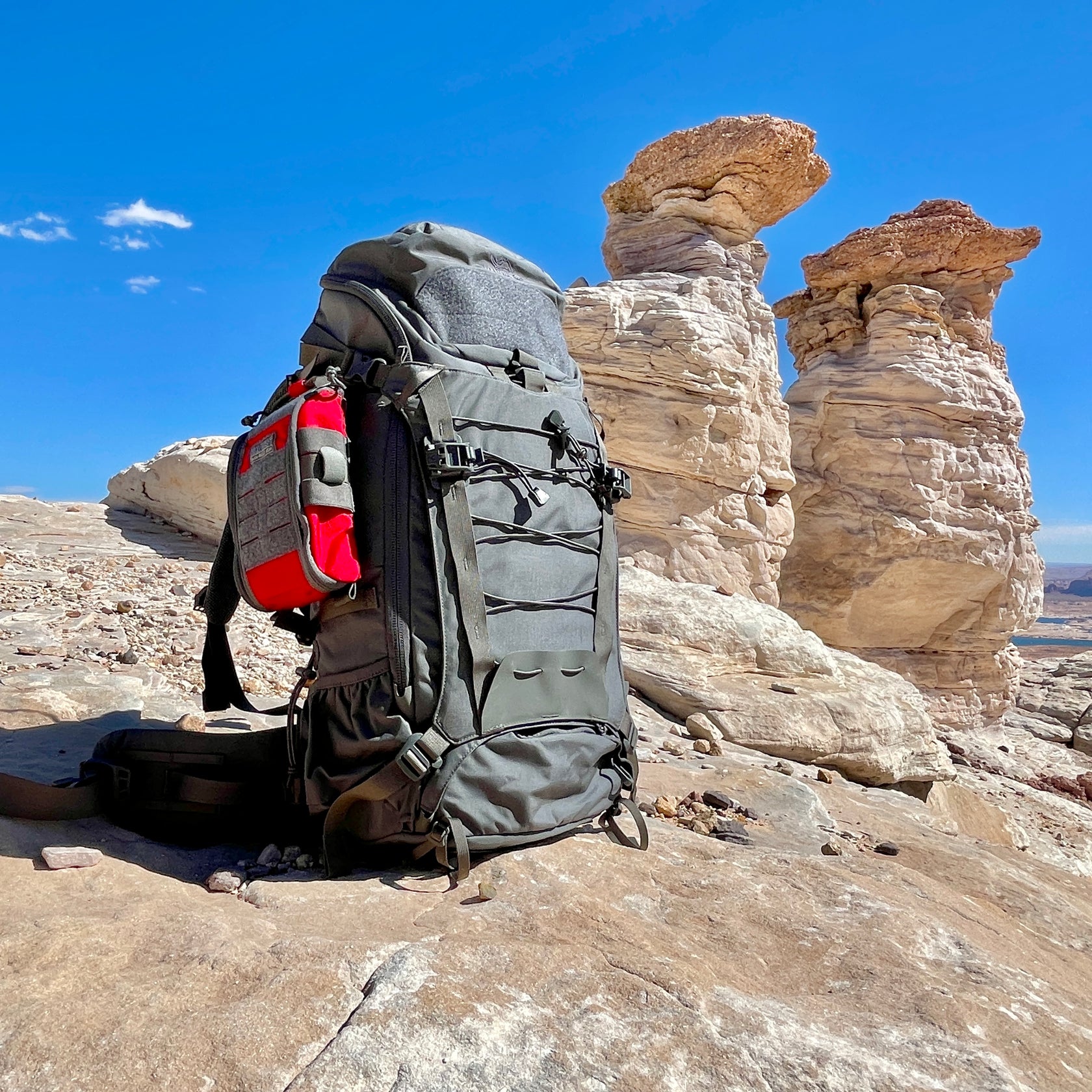
- Outside your IFAK: lashed under the compression straps of a FATPack-style pouch so the kit and the TQ deploy independently.
- Vehicle: visible and reachable from the driver's seat — headrest post or door pocket, not buried in the trunk. (Heat cycles degrade elastics over years; inspect vehicle-staged TQs regularly and rotate them into training use.)
One is none: many of our customers run one on-body, one in the kit, and one per vehicle. Restock from the Massive Hemorrhage collection.
3. Train Until It's Boring
- Mark a dedicated trainer. A tourniquet that's been applied dozens of times in practice should never be your carry TQ — windlass and band wear out. Mark trainers with tape.
- Keep the lanes separate — permanently. The discipline runs both directions: your carry CAT gets staged once and then left alone, and your trainer never migrates back into carry, no matter how clean it looks. Every application stretches the band and stresses the windlass in ways you can't see. If you ever apply your carry TQ — in practice or for real — it's now a trainer. Replace it.
- Practice high-and-tight on both limbs, strong hand and weak hand, eyes open and closed. Add time pressure once the mechanics are smooth — our step-by-step guide to applying a tourniquet in under 30 seconds gives you a benchmark to train against.
- Get formal instruction. A free Stop the Bleed class takes about 90 minutes; our education hub lists TCCC resources and video walk-throughs.
Inspect It Like It's a Parachute
A CAT is durable, but it isn't immortal. Build a quick inspection into your quarterly kit check:
- UV and heat are the killers. Sunlight breaks down the band's fibers and stitching over time, and dashboard-level heat accelerates it. A TQ that lives exposed on a plate carrier or sun-baked in a windshield-facing pouch ages far faster than one in a covered holder — a flap-covered carrier or an inside-the-pouch stage buys years.
- Look for fading, fraying, and stiffness. A chalky, faded band, cracked windlass clip, or fuzzy stitching means it goes to the training pile and a fresh unit takes its place.
- Check the staging, too. Confirm the band hasn't crept, the windlass is still clipped, and the red tip is where your hand expects it.
For a broader look at what ages out and when, see our trauma supplies shelf life guide.
Beware of Counterfeits
Marketplace listings are flooded with counterfeit CATs that fail at the windlass or buckle under load — the fakes look nearly identical in photos, then snap when torqued against a real limb. The tell is usually price: a "CAT" selling for a third of retail isn't a deal, it's a plastic prop. Multi-packs at too-good prices on third-party marketplaces are the classic trap. Buy from authorized dealers only — every CAT Gen-7 we sell comes through North American Rescue's authorized supply chain, and NAR maintains a public list of authorized distributors you can verify any seller against. If you're weighing the CAT against its main rival, our CAT Gen-7 vs. SOF-T Wide comparison breaks down where each wins.
Disclaimer: This article is educational reference only and is not a substitute for professional medical care or certified training. Tourniquet application carries real risk — complete a certified bleeding-control course (Stop the Bleed, TCCC) before you need these skills.
Mentioned in this article
More stories

Vehicle First Aid Kit Guide: What to Keep in Your Car, Truck, or Overland Rig