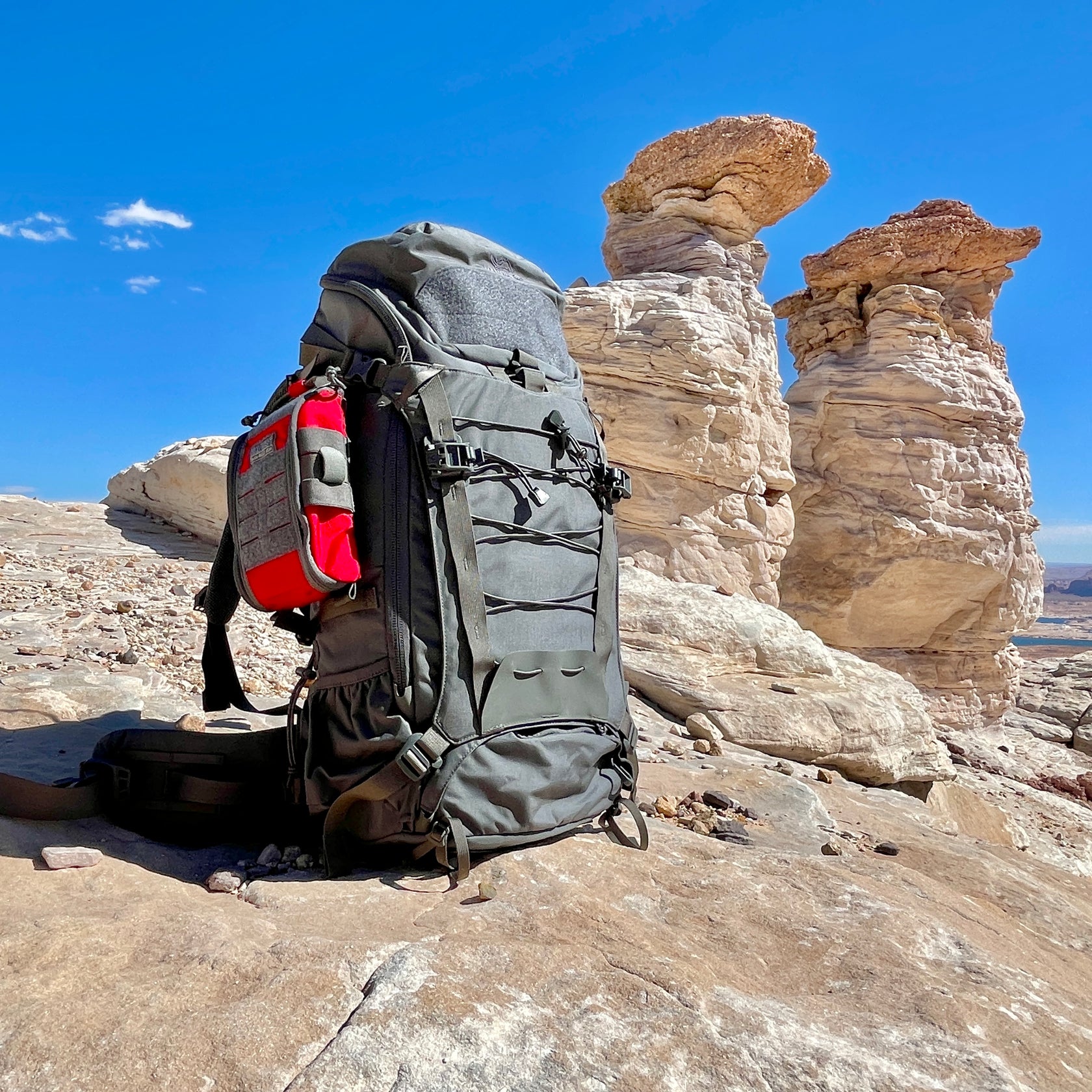


An IFAK — Individual First Aid Kit — is not a household first aid box. It is a purpose-built loadout for treating the injuries that kill people in minutes: massive hemorrhage, airway obstruction, and chest trauma. A drawer full of bandages and antiseptic wipes will not stop arterial bleeding. This list covers the 10 items that belong in every serious IFAK, why each earns its place, and how they map to the MARCH protocol that trauma medicine is built around.
If you would rather not source each piece individually, a pre-assembled kit like the AID-PAK Gen-2 already contains these essentials in a proven layout. But understanding why each item is there makes you a better responder — and a smarter buyer.

The 10 items every IFAK needs
1. A CoTCCC-recommended tourniquet
The single most important item in the kit. A limb with an arterial bleed can empty in two to three minutes. A windlass tourniquet like the CAT Gen-7 stops that bleed in seconds. Buy a genuine, CoTCCC-recommended model — counterfeits fail under load. Carry it where you can reach it one-handed, and keep a second one nearby, because roughly a quarter of extremity bleeds need two.
2. Hemostatic or wound-packing gauze
Tourniquets do not work on the neck, armpit, or groin — the junctional zones. For those, you pack the wound. Z-fold wound packing gauze or a hemostatic version accelerates clotting when pressed directly into the source of bleeding. This is the second layer of hemorrhage control after the tourniquet.
3. A pressure bandage
Once a wound is packed, you need to hold that pressure. An emergency trauma dressing such as the 6-inch ETD combines a sterile pad, elastic wrap, and a pressure bar into one wrap, freeing your hands to manage the rest of the patient.
4. A vented chest seal (ideally two)
A penetrating chest wound can collapse a lung. A vented chest seal covers the entry — and any exit — wound while letting trapped air escape. Twin packs exist for a reason: bullets and blades usually make two holes.
5. Nitrile gloves
PPE is step zero. Before you touch blood, you glove up. A pair of heavy-duty nitrile gloves protects you and the patient. Store a size that fits you; fumbling with gloves that are too small wastes seconds you do not have.
6. Trauma shears
You cannot treat what you cannot see. A pair of trauma shears like the ONE SHEAR BUS cuts through clothing, seatbelts, and boot leather to expose a wound fast, without a blade near the skin.
7. A compact airway adjunct
An unconscious casualty can lose their airway to their own tongue. A nasopharyngeal airway (NPA), sized and lubricated, keeps that passage open. This is a skill-dependent item — get trained before you carry it.
8. A survival/space blanket
Trauma patients get cold, and cold worsens bleeding by disrupting clotting. Keeping a casualty warm is part of the "H" in MARCH. A mylar blanket weighs almost nothing and belongs in every kit.
9. A permanent marker
Write the tourniquet application time on the casualty's skin or forehead. That single data point tells EMS how long the limb has been occluded — critical for their decisions downstream.
10. Gauze pads and tape
For the injuries that are serious but not life-threatening — lacerations, abrasions, minor bleeds — a few sterile pads and a roll of tape round out the kit. This is where a household first aid kit stops and an IFAK keeps going.
How these items map to MARCH
The order above is not random. It follows the trauma priority sequence used by TCCC:
| Letter | Threat | Kit items |
|---|---|---|
| M — Massive hemorrhage | Arterial bleeding | Tourniquet, packing gauze, pressure bandage |
| A — Airway | Obstruction | NPA |
| R — Respiration | Chest injury | Vented chest seal |
| C — Circulation | Shock | Reassess bleeds, warmth |
| H — Hypothermia | Heat loss | Space blanket, marker |
You can shop UMG's catalog the same way — by MARCH stage — starting with the Massive Hemorrhage collection. To see how our pre-built kits stack up item by item, use the kit comparison chart.
Building vs. buying
A well-built IFAK is not about having the most gear — it is about having the right gear you know how to use. If you want to start from a proven baseline, our best IFAKs of 2026 guide ranks pocket, vehicle, and full-size options. For the broader picture on what an IFAK is and where it came from, read what is an IFAK. And once your kit is assembled, learn to use the most important item with our tourniquet application guide.
Frequently asked questions
How many tourniquets should an IFAK have?
At least one on your person and a second staged nearby. A significant share of extremity hemorrhages require two tourniquets to fully control, and you may need to treat more than one casualty.
Do I need hemostatic gauze or is plain gauze enough?
Plain compressed gauze works for wound packing when applied correctly. Hemostatic gauze adds a clotting agent that can shorten control time on stubborn junctional bleeds. Our gauze comparison breaks down the trade-offs.
What is the difference between an IFAK and a first aid kit?
An IFAK is built to treat life-threatening trauma — bleeding, airway, chest wounds. A first aid kit handles minor injuries. You want both, staged in different places.
Where should I store my IFAK?
Somewhere you can reach it in seconds and that avoids extreme heat. Heat degrades adhesives and sterile packaging over time, so a glovebox in summer is a poor long-term home.
Can I put together an IFAK myself?
Yes. Start with the 10 items above, buy quality components, and consider a kit components resupply source so you can rebuild after use. Then get trained. Learn more at our education hub.
Disclaimer: This article is for educational purposes only and is not a substitute for professional medical care or certified training. Seek qualified instruction (e.g., Stop the Bleed, TCCC) before relying on any trauma equipment.
Mentioned in this article
More stories

Gunshot Wound First Aid: What to Do in the First 5 Minutes