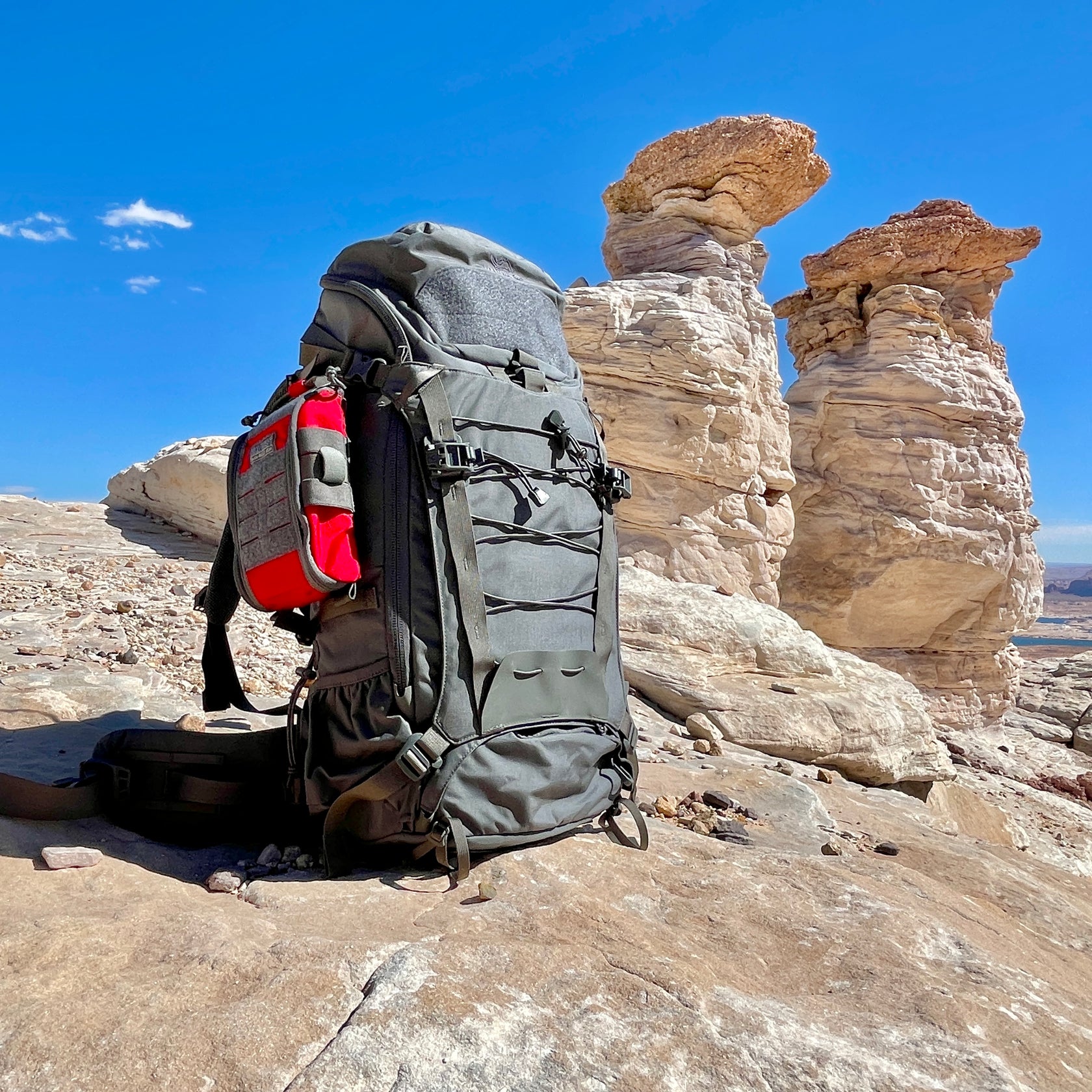


An IFAK — Individual First Aid Kit — is not a generic "boo-boo" kit. It exists to solve one problem: keeping someone alive during the minutes between a life-threatening injury and professional care. That means bleeding control, airway, and chest injuries first; band-aids and burn gel are a distant afterthought. The right kit depends entirely on where it lives and how fast you can reach it. A kit that saves a life in your truck may be useless if it's zipped in a bag three rooms away.
This guide ranks the best IFAKs of 2026 by use case rather than pretending one kit wins everything. We break it into three real-world categories — pocket/EDC, vehicle, and full-size — and give an honest pick for each. Every kit below is one we actually stock and stand behind. If you're new to the underlying skills, start with our complete guide to bleeding control and life-threatening injuries, and use the UMG kits comparison chart to line up specs side by side.
Our Top Picks at a Glance
Jump straight to the kit that fits your carry method:
- Best Pocket / EDC: Pocket ACE IFAK by UMG
- Best Vehicle Kit: AID-PAK Gen-2
- Best Full-Size Trauma Bag: FATPack-PRO Large
- Best Trail / Outdoor: TRK-1 Trail Response Kit
How We Ranked These Kits
We evaluated every kit against the same TCCC-aligned criteria that govern the MARCH priorities — Massive hemorrhage, Airway, Respiration, Circulation, Hypothermia. In plain terms, a good IFAK earns its place by answering these questions honestly:
- Does it stop bleeding? A CoTCCC-recognized tourniquet and hemostatic or compressed gauze are non-negotiable for anything above pocket size.
- Can you reach it in time? The best-stocked bag in the world fails if it's buried. Size and mounting matter as much as contents.
- Is it organized under stress? Color-coded, labeled compartments beat a jumbled pouch when your hands are shaking.
- Is it honestly scoped? We'd rather sell you a smaller kit you'll actually carry than an oversized one you leave at home.
Best IFAKs of 2026, Ranked by Use Case
| Use Case | Our Pick | Why It Wins | Best For |
|---|---|---|---|
| Pocket / EDC | Pocket ACE IFAK | Truly pocketable, modular, and built around bleeding control you'll actually carry every day. | Everyday carry, concealed on-body, minimalists |
| Vehicle | AID-PAK Gen-2 | Compact 5x8 footprint that mounts to a headrest or seatback and stays reachable from the driver's seat. | Daily commuters, road trips, fleet vehicles |
| Full-Size | FATPack-PRO Large | High-capacity, fully loaded trauma bag with room for redundancy and multi-casualty response. | Home base, range days, group leaders, preppers |
| Trail / Outdoor | TRK-1 Trail Response Kit | Lightweight, pack-friendly kit tuned for outdoor emergencies far from an ambulance. | Hikers, hunters, overlanders, backcountry |
Best Pocket / EDC IFAK: Pocket ACE IFAK by UMG

The hardest truth about EDC medical gear is that the best kit is the one you have on you. A full trauma bag in the trunk does nothing for a bleed in a parking lot. The Pocket ACE IFAK is our pick here because it collapses the essentials into a genuinely pocketable, modular package you'll carry without thinking about it.
It's scoped honestly. This is a bleeding-control-first kit, not a wilderness clinic — and that's exactly what an EDC IFAK should be. It won't replace a full-size bag, and we don't pretend it does. What it does is put a real hemorrhage-control capability in your front pocket, waistband, or bag every single day. If your current "kit" is a handful of band-aids, this is the upgrade that actually matters.
Best Vehicle IFAK: AID-PAK Gen-2

Vehicles are where preventable deaths happen — collisions, roadside incidents, and being first on scene for someone else's wreck. A vehicle IFAK has to thread a needle: big enough to carry a tourniquet, chest seals, and gauze, but compact enough to mount within arm's reach and not migrate to the bottom of the trunk. The AID-PAK Gen-2 hits that balance on a proven 5x8 platform.
The 5x8 footprint is the sweet spot for automotive use. It straps cleanly to a headrest post or seatback MOLLE panel, staying visible and reachable from the front seats rather than buried in cargo. For most drivers, this is the kit we'd put in the vehicle first — and if you want an even lighter on-body companion, pair it with the Pocket ACE. Browse the full range of ready-to-go options in our Stocked Kits collection.
Best Full-Size IFAK: FATPack-PRO Large

When space and reach-time aren't the constraint — a home, a shop, a range bag, a base camp — bigger genuinely is better. Redundancy matters when you might treat more than one person, or when you burn through supplies stabilizing a single serious injury. The FATPack-PRO Large is our full-size pick: a high-capacity, fully loaded trauma bag with the room to carry backups of every critical item and still hold general first-aid supplies.
This is the kit that anchors a system. Keep the FATPack-PRO as your primary at home base, then feed smaller IFAKs — a vehicle AID-PAK, a pocket kit — off the same standard so your training carries across all of them. It's overkill for daily carry, and we'd never tell you otherwise; its job is depth, not portability.
Best Trail / Outdoor IFAK: TRK-1 Trail Response Kit
Backcountry emergencies come with a brutal multiplier: help is hours away, not minutes. That changes the math. The TRK-1 Trail Response Kit is built for weight-conscious carry where every ounce in your pack is scrutinized, without cutting the bleeding-control capability that keeps someone alive until you can reach a trailhead or signal for evac.
For hikers, hunters, and overlanders, the TRK-1 is the honest middle ground between a pocket kit and a full trauma bag. If you want to compare it against our other compact options, the Compact Kits collection lays out the lightweight lineup.
How to Choose the Right IFAK for You
Don't overthink the brand debate — think about carry. Answer one question: where will this kit physically live, and how fast can I get it open? Then buy for that spot. Most people we talk to end up with two or three kits, not one: a pocket kit that's always on-body, a vehicle kit, and a full-size bag at home. That's not upselling — it's how coverage actually works, because no single kit can be simultaneously pocketable and fully stocked.
Whatever you choose, gear is only half the equation. A tourniquet you've never applied under pressure is a gamble. Get hands-on training — Stop the Bleed and TCCC courses are widely available — and read our bleeding control guide to understand what each item in your kit is actually for.
Frequently Asked Questions
What is the difference between an IFAK and a regular first aid kit?
A regular first aid kit is built for minor injuries — cuts, blisters, headaches. An IFAK is built for life threats: massive bleeding, airway problems, and chest injuries. The defining items are a CoTCCC-recognized tourniquet, hemostatic or compressed gauze, and chest seals — none of which appear in a drugstore first aid kit.
What should every IFAK contain at minimum?
At an absolute minimum, an IFAK should carry a quality tourniquet, gauze for wound packing (hemostatic or plain compressed), and a pressure bandage. Above pocket size, add chest seals, gloves, trauma shears, and a marker to note tourniquet time. Anything beyond that is scaling up for capacity, not changing the core mission.
Do I need training to use an IFAK?
Yes. Owning a tourniquet is not the same as knowing how to apply one correctly under stress, and a misapplied tourniquet or improperly packed wound can cost time you don't have. Take a Stop the Bleed or TCCC-based course before you rely on any trauma kit. The gear buys you the chance; the training lets you use it.
Where should I keep my IFAK?
Reachability beats capacity. Keep a pocket or belt kit on your body, a compact kit mounted within arm's reach in your vehicle, and a full-size bag at home or base. A kit you can't reach in the first minute is a kit you don't have.
Can one IFAK cover every situation?
No — and any product page claiming otherwise is selling you a compromise. Pocketability and full stocking are opposing goals. The realistic answer is a small system: an everyday-carry kit, a vehicle kit, and a full-size bag, all built around the same core skills so your training transfers across every one.
Disclaimer: This article is for educational purposes only and is not a substitute for professional medical care or certified training. Seek qualified instruction (e.g., Stop the Bleed, TCCC) before relying on any trauma equipment.
Find similar articles:
2026 bleeding control buyer guide EDC first aid kit IFAK trauma care vehicle kitMentioned in this article
More stories

Vented vs. Non-Vented Chest Seals: Which Should Be in Your Kit?