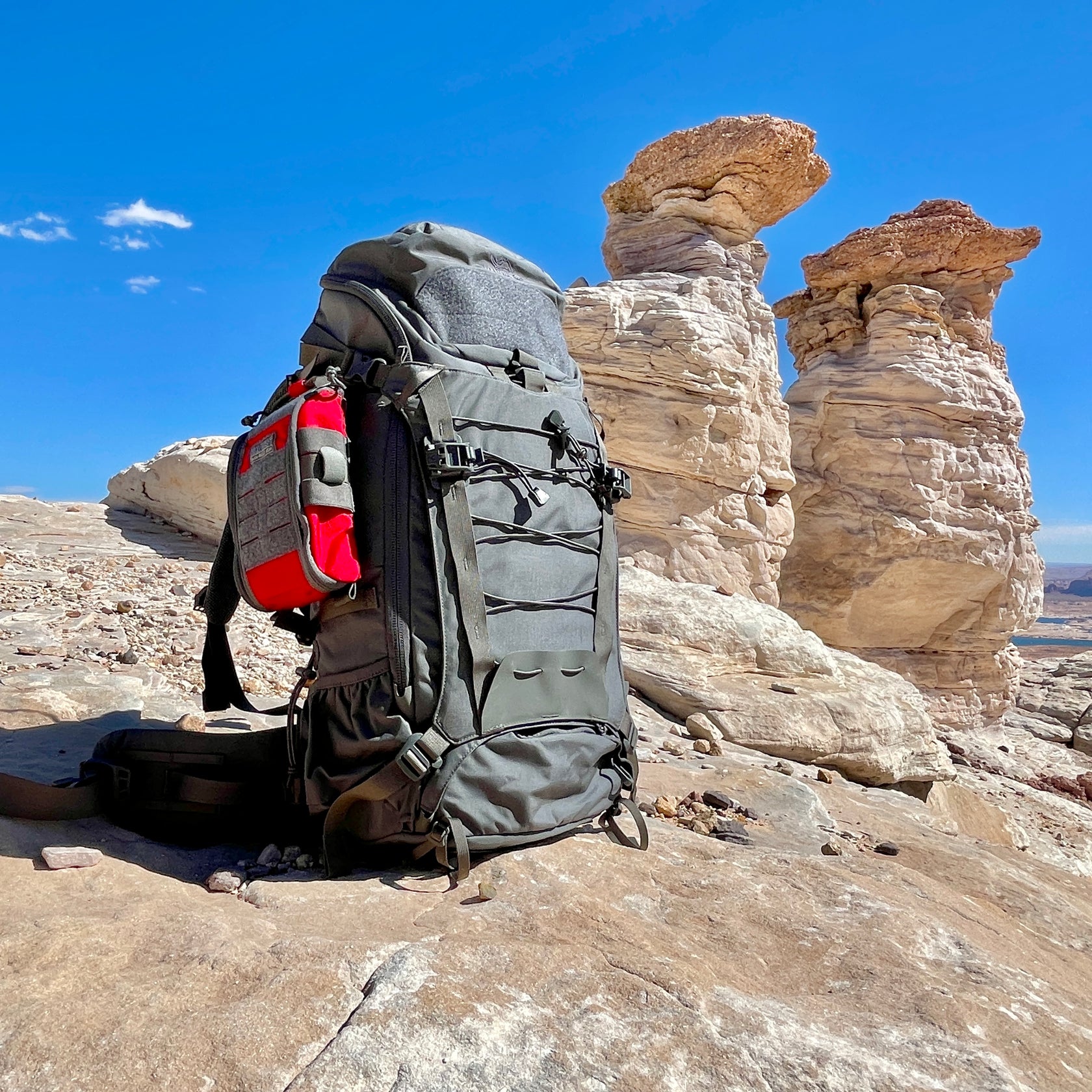


Search for a "hiking first aid kit" and you'll find everything from a zip-lock bag of adhesive bandages to a 40-pound expedition chest. Neither extreme serves you on a real trail. Wilderness first aid isn't about carrying more stuff — it's about understanding how injuries behave when the ambulance is hours or days away, and building your gear, skills, and decision-making around that reality.
This guide is the hub for everything Urban Medical Gear publishes on backcountry medicine. It covers the core problems you're most likely to face outdoors — severe bleeding, orthopedic injuries, environmental emergencies, bites, waterborne illness — plus how to choose a kit by trip length, when to evacuate, and where to get real training. Each section gives you the working framework now; deeper cluster articles will expand each topic over time.
Why Outdoor Injuries Are Different
Urban first aid assumes one thing wilderness first aid can't: rapid professional backup. In town, your job is to keep someone alive for the 8–12 minutes it takes EMS to arrive. In the backcountry, the equation changes completely.
- Delayed definitive care. Average rescue times in remote terrain run from several hours to more than a day. Conditions you'd hand off in minutes — a bleed, a dislocation, hypothermia — become conditions you manage.
- The environment is an active threat. A sprained ankle at the trailhead is an inconvenience. The same sprain eight miles in, with weather moving through and daylight fading, becomes an exposure problem. Every backcountry injury has two components: the injury itself, and the environment working against the patient.
- Improvisation is mandatory. You will never carry everything. Wilderness medicine leans on trekking poles as splint stays, foam pads as cervical support, and spare clothing as padding. Gear matters, but knowing how to extend it matters more.
- You are the medical system. Assessment, treatment, monitoring, documentation, and the evacuation decision all fall on whoever is present. That's why training (covered below) is the highest-value item you can "carry."
Everything that follows is built on that premise: longer timelines, hostile conditions, limited gear, and you in charge.
Bleeding Control on the Trail
Severe hemorrhage is the fastest killer in trauma — a major arterial bleed can be fatal in minutes, far faster than any rescue. It's also the most survivable emergency when someone nearby has the right equipment and knows how to use it. Falls onto sharp rock, axe and saw accidents in camp, and animal encounters all produce wounds that adhesive bandages were never designed for.
The hierarchy is simple: direct pressure first, wound packing for junctional areas like the groin and armpit, and a commercial tourniquet for life-threatening extremity bleeding that pressure can't stop. A proven windlass tourniquet like the CAT Gen-7 weighs about two and a half ounces — there is no weight argument against carrying one on any trip involving rock, blades, or remote terrain.

Two cautions. First, improvised tourniquets (belts, bandanas, paracord) fail at a high rate — they can't generate the mechanical advantage a windlass provides. Carry the real thing. Second, a tourniquet is a bridge to evacuation, not a treatment; applying one means your trip is over and the clock is running. For the full protocol — pressure, packing, tourniquet conversion, and the gear that supports each step — see our dedicated pillar on trauma first aid and bleeding control.
Sprains, Fractures, and Splinting Basics
Orthopedic injuries are the most common reason backcountry trips end early. Ankle sprains lead the list by a wide margin, followed by knee injuries and wrist fractures from falls onto outstretched hands.
The field decision isn't usually "sprain or fracture" — without imaging you often can't know, and it rarely changes your immediate management. The decision is usability: can the injured limb bear weight or function well enough to self-evacuate?
- Assess circulation, sensation, and movement below the injury before and after anything you do. Loss of any of the three upgrades the urgency dramatically.
- Splint in position of function, immobilizing the joint above and below the injury. A moldable aluminum-foam splint is the single most versatile orthopedic item you can carry; sleeping pads, sticks, and trekking poles extend it.
- Pad generously and recheck. Swelling continues for hours. A splint that was comfortable at noon can become a circulation problem by dinner.
- Usable ankle injuries can often be supported with tape or a wrap and walked out slowly. Obvious deformity, inability to bear weight, or compromised circulation means the patient doesn't walk — you're now in evacuation planning.
A deeper cluster article will cover specific splinting techniques by body region. Until then: immobilize, pad, recheck, and be honest about whether the limb is truly usable.
Environmental Emergencies: Heat, Cold, and Lightning
The environment injures more hikers than trauma does, and it does so quietly.
Heat illness
Heat exhaustion — heavy sweating, weakness, nausea, headache — is managed with shade, rest, fluids with electrolytes, and active cooling. The red line is altered mental status: confusion, stumbling, or combativeness in a hot patient means heat stroke, a true field emergency. Cool aggressively with water and airflow and evacuate immediately. Heat stroke kills, and it kills fit people who "pushed through."
Cold injury and hypothermia
Most backcountry hypothermia happens between 30 and 50 degrees Fahrenheit in wet, windy conditions — not in arctic cold. Watch for the "umbles": stumbles, mumbles, fumbles, grumbles. Early intervention is simple: dry insulation, wind protection, calories, and warm sweet drinks. A shivering patient who can eat and drink is recoverable in the field; a patient who has stopped shivering and is becoming lethargic is critical. Insulate from the ground, wrap in a vapor barrier (the classic "burrito"), handle gently, and get help moving.
Lightning
When storms build, get off ridges and summits early, avoid lone trees, and spread your group out. If someone is struck, start CPR immediately if they're pulseless — lightning-strike patients have unusually good resuscitation outcomes, and unlike almost every other wilderness scenario, "dead" is not the end of the protocol. Strike victims carry no charge; treat them without hesitation.
Wildlife, Bites, and Stings
Animal encounters occupy an outsized share of hiker anxiety and a tiny share of actual incidents — but when they happen, the wounds combine trauma with heavy contamination.
- Snakebite: keep the patient calm and the bitten limb immobilized at roughly heart level, remove rings and tight items before swelling, and evacuate to definitive care. Do not cut, suck, ice, or apply a tourniquet — every folk remedy makes outcomes worse. Antivenom is a hospital treatment; your job is a calm, efficient evacuation.
- Mammal bites: control bleeding first, then irrigate aggressively with clean water — infection, not blood loss, is the usual complication. Any wild-mammal bite raises rabies questions that must be answered by a clinician.
- Stings and anaphylaxis: the danger isn't the sting, it's the allergic response. Facial swelling, hives spreading beyond the sting site, wheezing, or throat tightness is anaphylaxis — a genuine minutes-count emergency. Anyone with a known severe allergy should carry their prescribed epinephrine and their partners should know where it lives.
- Ticks: remove promptly with fine tweezers, gripping at the skin, pulling straight out. Note the date; a spreading rash or flu-like illness in the following weeks needs medical follow-up.
Water, Food, and GI Illness
Gastrointestinal illness ruins more wilderness trips than every category of trauma combined. Giardia, cryptosporidium, and garden-variety fecal-oral contamination from poor camp hygiene will take a strong hiker off their feet for days.
Prevention is nearly free: treat all backcountry water by filter, chemical treatment, or boiling; wash or sanitize hands before handling food and after bathroom stops; keep camp kitchens and latrines far apart and both far from water sources.
Field management of GI illness is fundamentally about hydration. Vomiting and diarrhea in a patient who is also hiking, sweating, and rationing water becomes a dehydration spiral fast. Small, frequent sips of treated water with electrolytes beat large gulps that come right back up. The evacuation triggers: blood in stool or vomit, signs of significant dehydration (dizziness on standing, minimal dark urine), fever with worsening abdominal pain, or any patient who can't keep fluids down beyond 24 hours.
Choosing a Kit by Trip Length
Kit selection is where most hikers either dramatically overpack the wrong things or carry a pouch of bandages and call it covered. We've written a full breakdown of the difference between an IFAK and a first aid kit — the short version is that they solve different problems, and outdoor travel usually demands some of both: trauma capability for the low-probability, high-consequence event, and boo-boo supplies for the daily blisters, splinters, and headaches.

Scale by time-to-help, not just days out:
| Trip profile | What to carry | Example loadout |
|---|---|---|
| Day hike, frontcountry (help < 2 hrs) | Pocket trauma essentials + blister/wound care | A pocketable modular kit like the Pocket ACE IFAK |
| Full-day or remote day trip (help 2–6 hrs) | Tourniquet, pressure dressing, gauze, plus sprain and wound care | A dedicated trail kit like the TRK-1 Trail Response Kit or the AID-PAK Gen-2 |
| Multi-day backpacking (help 6–24 hrs) | Full trauma module + wound closure, splint, meds module, foot care depth | A stocked kit from our stocked kits collection in a rapid-access pouch |
| Expedition / group leader (help 24+ hrs) | Group-scaled consumables, airway adjuncts per training, documentation | A high-capacity bag like the FATPack-PRO Large |

Three principles override everything in the table. First, access speed matters more than contents — a tourniquet buried under camp food is a tourniquet you don't have. Tear-away and clamshell designs from our bags and pouches collection exist for exactly this reason, and they mount to packs from our backpacks and slings collection so trauma gear rides where either hand can reach it. Second, never carry gear that exceeds your training — it wastes weight and invites mistakes under stress. Third, restock immediately after every use; a half-depleted kit gives you half-confidence at the worst moment.
If you're comparing options across the lineup, our kit comparison chart lays out contents, weights, and intended use side by side, and the compact kits and survival and tools collections cover the lighter and more utility-driven ends of the spectrum.

The Evacuation Decision
The hardest skill in wilderness medicine isn't a technique — it's the judgment call about whether a trip continues. Make the framework explicit before you need it:
- Evacuate rapidly (activate SOS/rescue): altered mental status from any cause, breathing difficulty, severe bleeding requiring a tourniquet or packing, suspected spine injury with deficits, chest pain, anaphylaxis, heat stroke, hypothermia beyond mild, snakebite with symptoms.
- Evacuate, pace negotiable: fractures and dislocations with intact circulation, wounds that clearly need closure, GI illness that isn't resolving, burns beyond the trivial, any injury that's worsening despite treatment.
- Monitor and continue with caution: usable sprains, small wounds responding to care, mild heat or cold stress fully resolved with treatment.
Two rules of thumb earn their keep. Anticipate the trend: ask where this patient will be in six hours, not where they are now — in the backcountry you must act on the trajectory, because the decision made at 2 p.m. determines what your options are at dark. And when the group is split, the most conservative reasonable voice wins. Nobody has ever regretted walking out a day early. A satellite communicator changes this calculus enormously; carrying one is now standard practice for remote travel, but it supplements judgment rather than replacing it.
Training: WFA, WFR, and Beyond
Every piece of gear on this page is an output device for training. The inputs come from coursework and practice:
- Stop the Bleed (2–3 hours): hands-on hemorrhage control — pressure, packing, tourniquets. The minimum standard for anyone who carries trauma gear.
- Wilderness First Aid — WFA (16 hours): the weekend course that covers patient assessment, common injuries, and evacuation decisions. The right baseline for most hikers, hunters, and overlanders.
- Wilderness First Responder — WFR (70–80 hours): the professional standard for guides and trip leaders — extended patient care, complex assessment, and leadership during multi-hour incidents.
- Wilderness EMT and beyond: for those making patient care a profession.
Skills decay. Recertify on schedule, and between courses, rehearse with your own kit — open it blindfolded, find the tourniquet with either hand, repack it the same way every time. Our education page maintains current course recommendations and drills you can run at home.
Frequently Asked Questions
What should a hiking first aid kit contain?
Two layers: trauma capability (a commercial tourniquet, compressed gauze, a pressure dressing, gloves) and everyday care (blister supplies, wound cleaning and closure, tape, personal medications). Scale quantity by group size and time-to-help. The most common failure isn't a missing item — it's a kit buried where nobody can reach it in the first minute.
Is a tourniquet really necessary for hiking?
For any travel beyond rapid EMS response, yes. Severe extremity bleeding can be fatal well before rescue arrives anywhere, and a proven windlass tourniquet weighs about as much as an energy bar. Carry a commercial model like the CAT Gen-7 and get hands-on training — improvised tourniquets fail when it counts.
What's the difference between WFA and WFR certification?
Scope and depth. WFA is a 16-hour weekend course covering assessment, common problems, and evacuation decisions — right for most recreational users. WFR is a 70–80 hour professional credential for guides and leaders who may manage patients for many hours. If you regularly take others into remote terrain, WFR is the standard.
How is wilderness first aid different from regular first aid?
Regular first aid stabilizes a patient for the few minutes until EMS arrives. Wilderness first aid assumes help is hours to days away, so it adds extended patient care, environmental protection, improvisation, and evacuation decision-making. Same foundation, much longer timeline — and the timeline changes almost every decision.
Where should I carry my kit in my pack?
Trauma items go where either hand can reach them in seconds — a hip-belt pouch, an external tear-away like the FATPack 5x8, or the top of the pack. Everyday supplies can ride deeper. Tell your partners where it is; the kit is often used on its owner.
Keep Building Your Preparedness
This hub is the starting point. From here, read the companion pillar on trauma first aid and bleeding control, compare loadouts on the kit comparison chart, and check the education page for training resources. Deeper articles on each section above are on the way — bookmark this page; it will link to each one as it publishes.
Disclaimer: This article is for educational purposes only and is not a substitute for professional medical care or certified training. Seek qualified instruction (e.g., Stop the Bleed, TCCC) before relying on any trauma equipment.
Find similar articles:
backcountry medicine evacuation planning hiking first aid kit IFAK outdoor safety trauma kit WFA training wilderness first aidMentioned in this article
More stories

Heat Exhaustion vs. Heat Stroke: How to Tell the Difference Fast