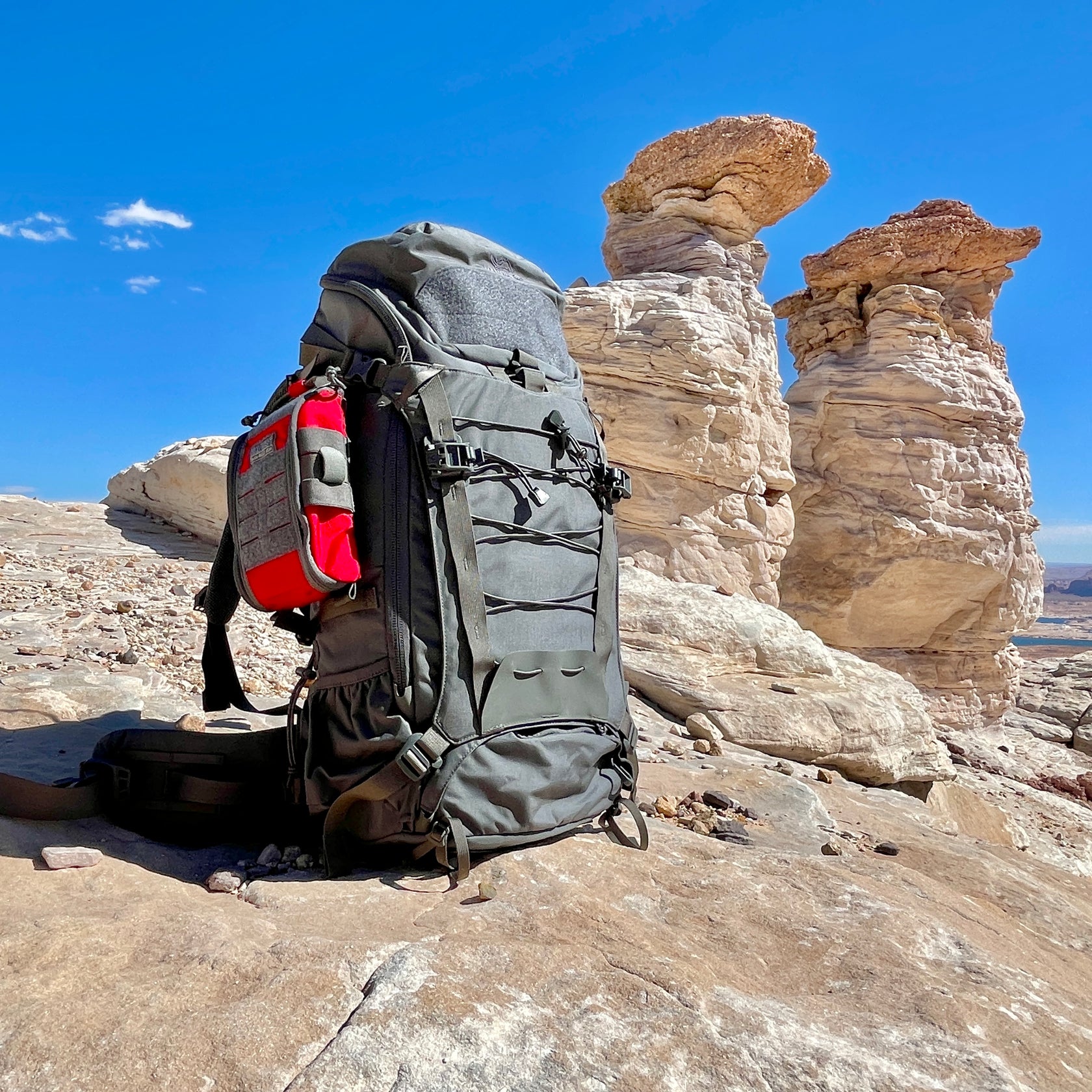


Most first aid training assumes one thing: an ambulance is on the way. You control the bleed, keep the airway open, and hand the patient off to professionals within the "golden hour." Survival medicine starts where that assumption breaks down. After a hurricane, an ice storm, a grid failure, or deep in the backcountry, the handoff might be hours away — or days. This guide is the hub for how we think about medical preparedness at Urban Medical Gear: what changes when help is delayed, what capabilities to build first, and how to stock and maintain supplies without falling for hype.
One thing up front: survival medicine is not a substitute for doctors, hospitals, or professional EMS. It is the discipline of stabilizing, sustaining, and improvising until real care becomes available. Anyone who tells you a kit and a YouTube playlist can replace a trauma surgeon is selling something. What you can do — with training and the right supplies — is keep a survivable injury survivable.
What Survival Medicine Actually Is
Conventional trauma care is built around the golden hour: rapid intervention, rapid transport, definitive care. Survival medicine — sometimes called austere medicine or remote medicine — is built around the opposite problem: extended care. The injury still happens in seconds, but now you own the patient for hours or days.
That shift changes almost everything:
- Stabilization is only the beginning. A packed wound and a pressure dressing solve the first fifteen minutes. Now you need to monitor, re-dress, and watch for deterioration.
- Small problems become big problems. A blister, a case of diarrhea, or a minor laceration is trivial with a pharmacy down the street. Off-grid, each one can degrade a person's ability to function — and untreated, can escalate.
- Prevention outperforms treatment. Clean water, safe food handling, foot care, and hygiene prevent more casualties in an extended emergency than any trauma kit treats.
- Improvisation matters, but improvised gear is a fallback. A SAM splint beats two sticks and a T-shirt. Carry the purpose-built item for the life threats; improvise for the rest.
The realistic goal is a household that can handle the injuries and illnesses that are actually likely, buy time for the ones that aren't, and make smart evacuation decisions when a problem exceeds its capability.
Trauma Capability: The Foundation
Massive hemorrhage kills in minutes, which means it kills long before "extended care" even starts. That's why trauma capability is the foundation of survival medicine, not an add-on. If you can't stop a major bleed, nothing else in your preparedness plan gets a chance to matter.

The framework we teach from is M.A.R.C.H. — Massive hemorrhage, Airway, Respiration, Circulation, Hypothermia/Head injury. It's the same priority sequence used in Tactical Combat Casualty Care (TCCC), and it works because it addresses the fastest killers first. We keep a full walkthrough on our M.A.R.C.H. protocol guide, and laminated M.A.R.C.H. quick-reference cards belong in every kit — under stress, nobody remembers as well as they think they will.
Minimum trauma capability per adult looks like this:
- A proven windlass tourniquet like the CAT Gen-7 — carried where you can reach it with either hand, not buried in a pack
- Wound packing gauze, such as NAR S-rolled gauze, and a pressure bandage like the 6” Emergency Trauma Dressing
- Vented chest seals — the HyFin Vent Compact twin pack covers entry and exit wounds
- Gloves, trauma shears, and a marker for recording tourniquet time
If you'd rather start with a curated loadout than assemble piece by piece, a stocked kit like the UMG Advanced IFAK or the compact AID-PAK Gen-2 gets you a coherent trauma capability in one purchase. Our kit comparison chart breaks down what each kit contains so you can match capability to your situation instead of guessing.

One rule we repeat constantly: get trained before you need the gear. A Stop the Bleed course takes an afternoon. Equipment without training is expensive luggage — more on that below.
Wound Care Over Days, Not Minutes
In the golden-hour model, wound care ends at "control the bleeding and cover it." In survival medicine, that same wound is now yours to manage for days, and the enemy changes from blood loss to infection.
The fundamentals of extended wound care are unglamorous and effective:
- Irrigation is the core skill. Copious amounts of clean — ideally potable — water flushed through a wound does more to prevent infection than anything you can smear on it afterward. Pressure matters more than additives.
- Clean technique, every time. Wash your hands, glove up with fresh nitrile gloves, and use sterile dressings. In austere conditions you can't be perfectly sterile, but you can be deliberately clean.
- Dress, check, re-dress. Change dressings on a schedule and any time they're soaked through or contaminated. Every dressing change is an inspection opportunity.
- Know the warning signs. Spreading redness, increasing pain after the first day or two, swelling, heat, pus, red streaking toward the torso, or fever — any of these means the wound is losing the fight and the patient needs professional care. That's not a failure of your preparedness; recognizing it early is the preparedness.
You'll notice what's missing here: antibiotic regimens. Deciding whether a wound needs antibiotics — and which drug, at what dose, for which patient — is a clinical judgment call with real consequences, and it belongs to licensed providers. Stockpiling veterinary or "fish" antibiotics is a shortcut we don't endorse. Your leverage as a prepared layperson is aggressive wound hygiene and early recognition, not amateur pharmacology.
Supply-wise, extended wound care burns through consumables fast: gauze pads, rolled gauze, tape, and dressings disappear at a rate that surprises everyone the first time they manage a wound past day one. Stock accordingly, in depth, and see the supply strategy section below for how to keep that stock viable.
Environmental Threats: Heat, Cold, and Water
In most real disasters, the environment injures more people than trauma does.
Cold
Hypothermia doesn't need an arctic storm — it needs a wet patient and a cool night. Every trauma patient is a hypothermia patient, because blood loss wrecks the body's ability to regulate temperature; that's the H in M.A.R.C.H. Insulate casualties from the ground, get them dry, and trap heat with layers or a reflective blanket. Watch for the progression from shivering to confusion to sluggishness — the quieter a cold patient gets, the more worried you should be.
Heat
Heat exhaustion — heavy sweating, weakness, nausea, headache — is managed with shade, rest, water, and cooling. Heat stroke — hot skin, altered mental status, collapse — is a life threat that demands aggressive whole-body cooling and evacuation. The dividing line is the brain: when a hot casualty stops making sense, you've run out of "wait and see."
Water
Contaminated drinking water turns one disaster into two. Diarrheal illness dehydrates the patient, drains your supplies, and spreads through a group with shared sanitation. Filter, boil, or chemically treat every drop that didn't come from a sealed container. It's tedious, and it's non-negotiable.
Sanitation and Hygiene Are Medicine
Nothing about latrines and handwashing feels tactical, which is why it's the most neglected part of most preparedness plans — and historically, the most lethal gap. In extended emergencies, disease outbreaks from failed sanitation routinely outkill the original event.
Treat these as medical interventions, because they are:
- Hand hygiene before food handling, after latrine use, and before and after any patient contact. Soap and water first; sanitizer as backup.
- Human waste management — a designated latrine site well away from water sources, food, and living areas, even for a short outage. A basic entrenching tool earns its place in the plan.
- Food discipline — when refrigeration fails, be ruthless about what gets eaten and what gets discarded. Food poisoning in a grid-down scenario is a casualty you inflicted on yourself.
- Wound and laundry hygiene — dirty bedding and re-worn contaminated clothing are infection vectors for the patient you're already treating.
A family that stays clean, hydrated, and fed will need its trauma gear far less often. That's the quiet win of survival medicine: the best casualty is the one that never happens.
Supply Strategy: Rotation, Expiration, and Restock
Medical supplies are not a buy-once purchase. Adhesives dry out, elastics degrade, sterile packaging fails, and anything you actually use is gone until you replace it. A stockpile without a maintenance habit quietly becomes a box of expired trust.

A workable system is simple:
- Inventory twice a year. Pick two dates you won't forget — daylight saving changes work — and go through every kit. Check expiration dates, packaging integrity, and anything that looks crushed, discolored, or brittle.
- First in, first out. New stock goes to deep storage; older stock moves to the kits you carry and use. Near-expiry items become training material — practice wound packing with the gauze you'd otherwise throw away.
- Replace what you use, immediately. The IFAK you opened for a bad kitchen cut is now an incomplete kit. Restock it that week, not "eventually." Our restock and refills collection exists for exactly this, and the Fill-PAK rebuilds a stripped kit in one go.
- Track tourniquets seriously. A tourniquet that's lived on a hot dashboard or been repeatedly staged for practice is not the one you want on a real limb. Train with a designated trainer unit and keep your carry unit pristine.
Depth matters more than variety. Ten packs of gauze beat one exotic gadget. Stock consumables — gauze, dressings, gloves, tape — in quantities that assume multiple dressing changes per wound per day, because that's what extended care actually consumes. Individual components are in our kit components collection when you're building depth item by item.
Skills Beat Stuff — Every Time
A trained person with a pressure bandage will outperform an untrained person with a fully stocked aid bag. Gear extends skill; it doesn't create it.
The training pathway we recommend, in order:
- Stop the Bleed — a few hours, often free, and covers the single most time-critical skill: hemorrhage control with tourniquets and wound packing.
- CPR/AED and basic first aid — the baseline for every adult in the household, not just the "medical one."
- Wilderness first aid (WFA) or wilderness first responder (WFR) — this is where extended-care thinking is actually taught: assessment over time, improvisation, and evacuation decision-making with no ambulance in the equation.
- Regular practice. Skills decay. Put hands on a trainer tourniquet quarterly. Repack a practice wound. Run a family walkthrough of who grabs what.
Then train the second person. If you're the only one in the house who can use the kit, the plan fails on the day you're the casualty. Our education page maintains resources and course guidance to keep this from staying theoretical.
When the Grid Is Down: Communication and Evacuation
Survival medicine includes knowing how to hand the patient off when cell networks don't cooperate. Build the plan before you need it:
- Know your fallback comms. Text messages often get through when calls won't. Beyond that, a NOAA weather radio for inbound information and GMRS or ham radio (licensed) for outbound reach are proven layers. If you roam far from coverage, a satellite messenger with SOS service is the most reliable buy-time device on the market.
- Pre-plan destinations. Know your nearest emergency department, the nearest trauma center, and an alternate route to each. Write them down; stress erases memory.
- Set evacuation triggers in advance. Decide now what sends you toward definitive care regardless of road conditions: uncontrolled bleeding, breathing difficulty, altered mental status, signs of serious infection, chest pain, complicated childbirth. When a trigger fires, you move — the debate already happened.
- Make the patient transportable. Splint fractures before moving anyone. A SAM splint and elastic wrap turn an unmovable casualty into a movable one.
The point of extended care is not to avoid the medical system. It's to keep the patient alive and stable until you can reach it.
Building a Layered Family Medical Stockpile
Don't buy a giant bag of everything. Build in layers, where each layer backs up the one before it:
| Layer | Role | Example |
|---|---|---|
| On-body / everyday carry | The bleed you must stop right now | Tourniquet, compact dressing, gloves — a pocketable kit like the Pocket ACE IFAK |
| Vehicle / pack | Trauma plus first aid away from home | TRK-1 Trail Response Kit or AID-PAK Gen-2 |
| Home station | Extended care: volume and depth | Full IFAK such as the UMG Advanced IFAK plus deep consumable stock |
| Resupply | Replaces what the other layers burn | Restock & refills, Fill-PAK, bulk gauze and dressings |

Build responsibly, which means: buy proven gear from reputable manufacturers (counterfeit tourniquets are a real and documented problem), match quantities to the people you're actually covering, add items only as you gain the training to use them, and skip anything that requires a license or prescription you don't have. A modest, maintained, trained-on stockpile beats an impressive closet of mystery gear every single time. Browse stocked kits to anchor each layer, then deepen with components as your skills grow.
Frequently Asked Questions
What should be in a SHTF medical kit first?
Bleeding control, before anything else: a proven windlass tourniquet, wound packing gauze, a pressure dressing, gloves, and trauma shears. Massive hemorrhage is the fastest preventable killer, so it's the first capability to buy and the first skill to train. Build outward from there into wound care consumables, environmental protection, and everyday first aid.
How is survival medicine different from regular first aid?
Standard first aid assumes professional help arrives within minutes, so it focuses on immediate stabilization and handoff. Survival medicine assumes help is delayed by hours or days, so it adds extended wound management, infection awareness, hydration and sanitation, patient monitoring over time, and evacuation decision-making. The trauma skills are the same — the timeline is what changes.
Can I stockpile antibiotics for emergencies?
We don't recommend it. Choosing, dosing, and monitoring antibiotics is a clinical judgment that belongs to licensed providers, and self-treating with veterinary or fish antibiotics carries real risks — wrong drug, wrong dose, allergic reactions, and masking an infection that needed escalation. Your effective tools are aggressive wound irrigation, clean dressing changes, and recognizing early infection signs so you can seek professional care in time.
How often should I check and rotate my medical supplies?
Inventory every kit twice a year. Check expiration dates, sterile packaging integrity, and the condition of elastics and adhesives. Rotate older stock into daily-carry kits, use near-expiry consumables for training practice, and replace anything you use immediately rather than "eventually."
What medical training should a prepper get first?
Start with Stop the Bleed — it's short, inexpensive or free, and covers the most time-critical skill set. Add CPR/AED and basic first aid for every adult in the household, then pursue a wilderness first aid course, which is where extended-care skills are actually taught. Refresh hands-on skills at least quarterly.
Related Reading
- Trauma First Aid: The Complete Bleeding Control Guide
- The M.A.R.C.H. Protocol, Explained
- UMG Kits Comparison Chart
- Training & Education Resources
Disclaimer: This article is for educational purposes only and is not a substitute for professional medical care or certified training. Seek qualified instruction (e.g., Stop the Bleed, TCCC) before relying on any trauma equipment.
Mentioned in this article
More stories

Medical Preparedness for Beginners: Your First 5 Purchases