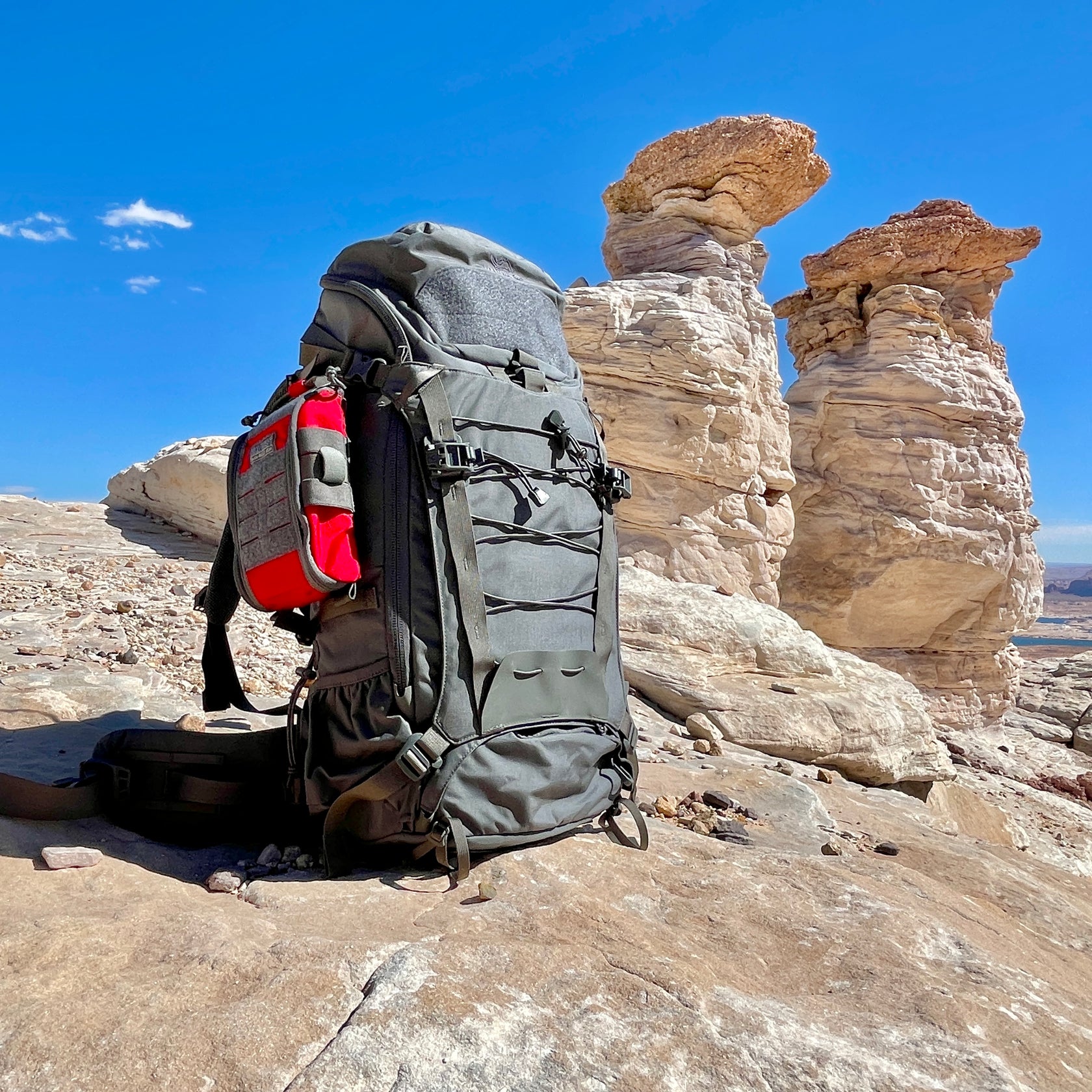


If you spend time in the backcountry — hiking, hunting, climbing, trail running, guiding, or overlanding — you already understand that help is not fifteen minutes away. When definitive care is hours or days out, the person who can make decisions and improvise becomes the most important piece of equipment in the group. That capability comes from training, not gear.
The problem is that "wilderness medicine training" is not one thing. There are three primary tiers — Wilderness First Aid (WFA), Wilderness First Responder (WFR), and Wilderness EMT (WEMT) — and they differ enormously in hours, cost, scope of practice, and who they are actually for. Picking the wrong one wastes money or, worse, leaves you under-prepared for the trips you actually run. This guide breaks down the differences objectively so you can choose the certification that matches your real exposure.
Why wilderness certifications exist separately from urban first aid
Standard first aid and even EMT training assume the "golden hour" — a definitive-care facility reachable within roughly 60 minutes. Wilderness protocols throw that assumption out. They are built around prolonged field care: what you do when evacuation is delayed by terrain, weather, distance, or darkness. That single shift changes everything downstream.
Wilderness curricula add skills that urban providers are explicitly taught not to perform, because in the backcountry the alternative is worse: clearing a spine injury in the field, reducing certain dislocations, discontinuing CPR after a defined interval, cleaning and closing wounds, and managing a patient over many hours. They also drill improvisation — splinting with trekking poles, building litters, and rationing limited supplies. You are not memorizing a scope of practice designed for an ambulance; you are learning to think like a provider with no backup.
WFA vs. WFR vs. WEMT at a glance
The table below compares the three main tiers on the factors that actually drive a decision. Hours and pricing vary by provider (NOLS Wilderness Medicine, SOLO, WMA International, and Aerie are the most recognized), so treat these as representative ranges rather than fixed numbers.
| Certification | Typical hours | Cost range | Who it's for | Recertification |
|---|---|---|---|---|
| WFA — Wilderness First Aid | 16–20 hours (usually a weekend) | $200–$350 | Weekend hikers, scout leaders, trip participants, anyone recreating within a day of the trailhead | Every 2–3 years; often re-take the full course |
| WFR — Wilderness First Responder | 70–80 hours (7–10 days) | $700–$1,000 | Guides, outdoor educators, expedition members, search & rescue, serious backcountry travelers | Every 2–3 years via a 2–3 day recert; CPR kept current |
| WEMT — Wilderness EMT | ~200+ hours (EMT-Basic plus a wilderness module) | $1,000–$2,500+ | Professional field medics, remote-area SAR, those who want a licensed EMT credential plus wilderness scope | Wilderness portion every ~3 years; EMT license on its own state/NREMT cycle |

Wilderness First Aid (WFA): the sensible baseline
WFA is the entry point, and for a large share of outdoor recreators it is genuinely enough. Over a focused weekend you cover patient assessment, wound management, splinting, environmental emergencies (hypothermia, heat illness, altitude), allergic reactions, and — critically — how to recognize when a situation is beyond you and needs evacuation.
What WFA does best is fix the two most common failure points among otherwise competent outdoorspeople: freezing under pressure, and not knowing when a problem is serious. It is the right choice if you day-hike, car-camp, run trails close to a road, or lead groups that stay within a few hours of definitive care. If your trips rarely put you more than a day from a trailhead, WFA plus a well-built kit covers the overwhelming majority of what you will realistically encounter.
Pair the training with a kit you can actually run under stress. A compact, organized trauma pouch like the Vanquest FATPack 5x8 (Gen-2) gives you a purpose-built platform to assemble a WFA-appropriate loadout, and our compact kits collection covers day-trip and EDC-scale options that are easy to carry and fast to open.
Wilderness First Responder (WFR): the industry standard for professionals
The WFR — universally pronounced "woofer" — is the credential that outdoor professionals actually respect. At 70–80 hours it is roughly four times the depth of WFA, and that time buys real competence: extended patient assessment, longer-term monitoring and documentation, more aggressive wound care, dislocation reduction protocols, spinal assessment and field clearance, and structured decision-making for complex evacuations.
If you guide, teach outdoors, work trips, join a SAR team, or run expeditions where you are the de facto medical resource, the WFR is the baseline expectation — many employers require it. It is also the sweet spot for committed private adventurers whose objectives regularly put them a full day or more from help: multi-day backcountry hunts, alpine climbing, remote paddling, overland expeditions.
The WFR is demanding. Expect long days, realistic scenario "sims" with moulage and mock patients, and written and practical exams. You will leave able to manage a patient for hours with limited supplies and make a defensible call on whether to walk out, wait, or trigger a rescue.

Once you are trained to WFR depth, your kit should scale with your scope. A high-capacity, modular platform like the FATPack-PRO Large gives you room for the extended-care supplies WFR-level care demands — more dressings, airway adjuncts, splinting material, and redundancy for prolonged incidents. For an expedition or vehicle-based build, our TRK-1 Trail Response Kit is assembled specifically for outdoor and overland emergencies, and the full stocked kits collection covers ready-to-carry options across the size range.
Wilderness EMT (WEMT): a professional license plus wilderness scope
WEMT is a different category. It combines a full EMT-Basic certification — a licensed, nationally recognized clinical credential — with a wilderness module that adapts that scope to remote environments. This is the path for people who want to work as field medics, staff remote operations, run SAR at a clinical level, or use it as a stepping stone toward a career in EMS or medicine.
The tradeoff is time, cost, and maintenance. A WEMT involves roughly 200+ hours, meaningful expense, and two separate recertification tracks: the wilderness portion on its own cycle and the EMT license on your state or NREMT schedule. For a weekend hiker, that is far more credential than the terrain demands. For a professional whose job is remote medicine, it is the correct investment.
How to actually choose
Match the certification to your exposure, not your ambition. Ask three questions: How far from definitive care do your trips genuinely take you? Are you responsible for other people? Is this recreational or professional?
- Recreate within a day of a trailhead, responsible mostly for yourself or a small group? WFA is enough. Take it, carry a real kit, and repeat it every couple of years.
- Guide, teach, or run multi-day/remote objectives? Get the WFR. It is the professional standard and the right depth for serious private adventurers.
- Want a licensed clinical credential for remote work or a medicine/EMS career? The WEMT is your track — but only if you will use and maintain it.
Whichever tier you choose, remember that training and equipment are complements, not substitutes. A WFR with an empty pouch and a well-stocked kit in untrained hands are both liabilities. For a broader view of how these certifications fit into an overall progression — from basic first aid through tactical medicine — see our emergency medical training roadmap. If your trips lean deep-backcountry, our companion complete guide to wilderness first aid covers the field skills in more depth, and the UMG education and training resources page collects vetted course providers and references.
Frequently asked questions
Is WFA enough for backpacking trips?
For most weekend and short multi-day backpacking within a day of a trailhead, yes. WFA teaches you to assess a patient, manage common injuries and environmental emergencies, and recognize when to evacuate. If your trips regularly push you more than a full day from help, step up to the WFR.
Does a WFR expire?
Yes. Most WFR certifications are valid for two to three years and are renewed through a shorter 2–3 day recertification course, with CPR kept current separately. Requirements vary slightly by provider, so confirm the recert window when you enroll.
Can I skip WFA and go straight to WFR?
Absolutely. WFA is not a prerequisite for the WFR — the WFR is a complete, standalone course that covers everything WFA does and much more. If you already know you need the professional-level credential, enroll in the WFR directly rather than paying for both.
What kind of kit should I carry after training?
Match your kit to your scope and trip length. WFA-level travelers do well with a compact, organized trauma pouch; WFR-level and expedition users need a larger, modular platform with extended-care supplies and redundancy. Build around trauma fundamentals first — bleeding control, airway, wound care, splinting — then add environmental and prolonged-care items for your specific terrain.
Is a WEMT worth it for a private adventurer?
Usually not. For personal recreation, the WFR delivers nearly all of the practical field capability at a fraction of the time and cost. The WEMT makes sense when you need a licensed clinical credential for professional remote work or as a foundation for an EMS or medical career.
Disclaimer: This article is for educational purposes only and is not a substitute for professional medical care or certified training. Seek qualified instruction (e.g., Stop the Bleed, TCCC) before relying on any trauma equipment.
Find similar articles:
backcountry certification first aid medical training WEMT WFA WFR wilderness medicineMentioned in this article
More stories

What Is Stop the Bleed? The 90-Minute Course That Makes You Useful