

Ask any experienced medic what they would grab first in an emergency — the answer is never a piece of gear. It is the training between their ears. A $30 tourniquet in untrained hands is a paperweight; a trained responder with nothing but a t-shirt and body weight can still control life-threatening bleeding. This guide maps the entire emergency medical training landscape, from a free two-hour Stop the Bleed class to full Tactical Combat Casualty Care certification, so you can see exactly where you are, what comes next, and how to keep your skills sharp between courses.
Why Training Beats Gear — Every Time
The trauma industry sells equipment, but the data tells a different story. In a massive hemorrhage, a casualty can bleed out in three to five minutes — well before EMS arrives in most of the country, where average response times run seven to fourteen minutes. The person who determines whether that casualty survives is almost always the untrained-or-trained bystander already on scene. That is the entire premise behind the national Stop the Bleed campaign: bystanders are the true first responders.
Training also protects your gear investment. Studies of tourniquet application consistently show that untrained users fail to achieve arterial occlusion at high rates — they place the tourniquet too loosely, too low, or waste critical seconds fumbling with the windlass. The gear only works when the hands holding it know what they are doing. Before you buy your third kit, buy your first class. Our education hub exists for exactly this reason, and every kit we build assumes you will train with its contents, not just carry them.
One more uncomfortable truth: skills decay. Research on CPR retention shows measurable degradation within three to six months of certification. A training roadmap is not a ladder you climb once — it is a cycle of learning, practicing, and refreshing. Plan for that from day one.
The Civilian Pathway: Stop the Bleed to Wilderness Medicine
Most people should progress through the civilian pathway in order. Each tier builds on the last, and each one is useful on its own.
Step 1: Stop the Bleed (1–2 Hours, Often Free)
Stop the Bleed is the single highest-value entry point in all of emergency medical training. In one evening you learn the three core bleeding-control skills: direct pressure, wound packing, and tourniquet application — with hands-on practice on training limbs. Courses are run by hospitals, fire departments, and certified instructors nationwide, and many are free. If you own a trauma kit and have never taken this class, stop reading and register first. Everything in a kit like the UMG Basic IFAK maps directly to what this course teaches.

Step 2: First Aid, CPR, and AED Certification (4–8 Hours)
Bleeding control handles the fastest killer, but cardiac arrest is the most common one. A combined First Aid/CPR/AED course from the American Red Cross or the American Heart Association adds high-quality chest compressions, AED operation, choking response, and general first aid for burns, fractures, and medical emergencies. Certifications are valid for two years, courses run $40–$120, and blended online-plus-skills-session formats make scheduling easy. A compact barrier device like a CPR face shield keychain means the skill you certified is actually deployable when you are standing over a stranger.
Step 3: The Wilderness Tiers — WFA, WFR, WEMT
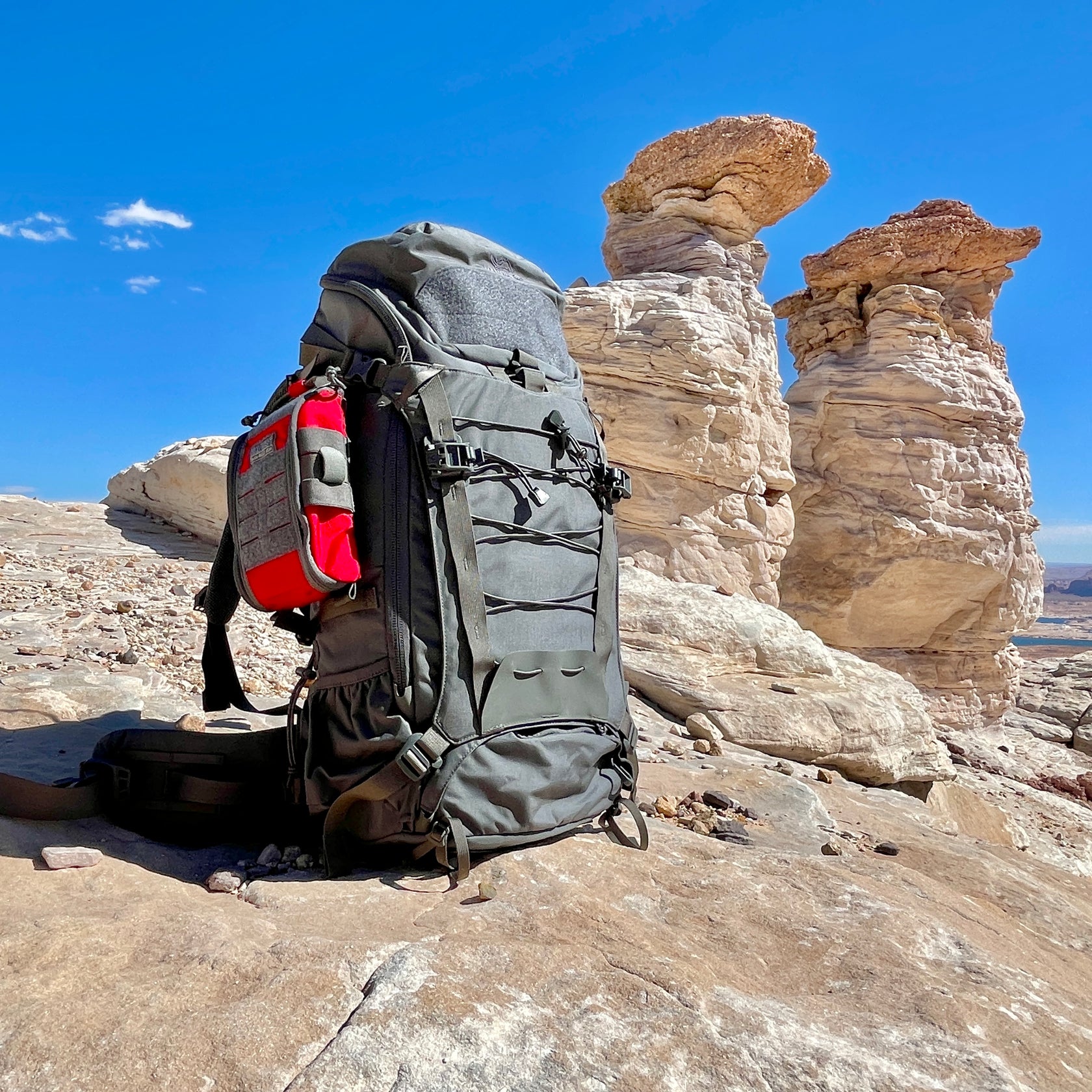
Urban training assumes an ambulance is minutes away. The moment you hike, hunt, overland, or live rurally, that assumption collapses — and wilderness medicine fills the gap with protocols built for prolonged care and improvisation.
- Wilderness First Aid (WFA) — a two-day, 16-hour course covering patient assessment, splinting, wound care, and evacuation decisions. The right tier for weekend hikers and family campers.
- Wilderness First Responder (WFR) — the industry standard for guides, trip leaders, and serious backcountry users. Roughly 40–80 hours covering extended patient care, spine injury management, environmental emergencies, and multi-hour evacuation scenarios. This is the course where medicine starts to feel like decision-making rather than memorized steps.
- Wilderness EMT (WEMT) — full EMT certification plus a wilderness module, typically 200+ hours. For search-and-rescue members, expedition medics, and anyone who wants professional-level credentials for remote environments.
Providers like NOLS Wilderness Medicine, SOLO Schools, and Wilderness Medical Associates run these nationwide. If your training is headed into the backcountry, your kit should follow — that is the design brief behind our vehicle-based trauma kits, and our kit comparison chart shows which loadout matches which environment and training level.
The Tactical Pathway: TCCC and TECC
Tactical medicine answers a different question than civilian first aid: how do you treat casualties when the environment itself is still trying to kill you? The two dominant frameworks are TCCC and TECC, and knowing which one fits you matters before you spend the money.
TCCC: Tactical Combat Casualty Care
TCCC is the U.S. military's battlefield trauma standard, maintained by the Committee on Tactical Combat Casualty Care and taught through NAEMT-certified programs. The civilian-accessible tier, TCCC All Combatants (TCCC-AC), teaches care under fire, tourniquet conversion, hemorrhage control, and casualty movement over roughly two days. Higher tiers (TCCC Combat Lifesaver and TCCC Medical Personnel) go deeper into airway management, needle decompression, and prolonged field care. TCCC certification is genuinely valuable for military members, armed professionals, contractors, and law enforcement — and increasingly popular with prepared civilians who want the most battle-tested trauma doctrine available.
TECC: Tactical Emergency Casualty Care
TECC translates TCCC's lessons into the civilian world — active violence events, industrial accidents, mass-casualty incidents — with civilian legal and scope-of-practice realities built in. If you are a teacher, EMS provider, security officer, or civilian who wants tactical-grade training without military framing, TECC is usually the better fit. Both frameworks organize treatment around the MARCH algorithm — Massive hemorrhage, Airway, Respiration, Circulation, Hypothermia/Head injury — which we break down step by step in our MARCH protocol guide.

A waterproof reference like the M.A.R.C.H. Cards belongs in every kit after tactical training — under stress, even trained responders benefit from a checklist that sequences interventions correctly.
Course Comparison at a Glance
| Course | Provider | Typical Hours | Cost Range | Who It's For |
|---|---|---|---|---|
| Stop the Bleed | American College of Surgeons network, hospitals, fire departments | 1–2 | Free–$20 | Everyone; the universal first step |
| First Aid/CPR/AED | American Red Cross, American Heart Association | 4–8 | $40–$120 | Households, parents, workplace responders |
| Wilderness First Aid (WFA) | NOLS, SOLO, WMA | 16 | $150–$350 | Hikers, hunters, overlanders, campers |
| Wilderness First Responder (WFR) | NOLS, SOLO, WMA | 40–80 | $600–$1,200 | Guides, trip leaders, backcountry regulars |
| EMT-Basic | Community colleges, EMS academies | 120–190 | $800–$2,000 | Volunteer/career responders |
| Wilderness EMT (WEMT) | NOLS, SOLO + state EMS | 200+ | $2,500–$4,500 | SAR teams, expedition medics |
| TECC | NAEMT-affiliated training centers | 16 | $200–$400 | Civilians, EMS, security, educators |
| TCCC-AC | NAEMT-certified programs | 16–40 | $300–$700 | Military, LE, armed professionals, prepared civilians |
Pediatric-Focused Training for Parents
Adult protocols do not scale down cleanly. Pediatric patients have different compression depths, different choking responses by age, different medication dosing, and — critically for trauma — limbs small enough that standard tourniquets may not fit a toddler, making direct pressure and wound packing the primary bleeding-control tools. Parents and caregivers should prioritize a dedicated Pediatric First Aid/CPR/AED course (Red Cross and AHA both offer them, often required for childcare licensing) and ask their Stop the Bleed instructor specifically about pediatric bleeding control. If you keep a kit in the diaper bag or family vehicle, train on its exact contents: know which dressing you would use on a child, and practice the wound-packing motion with rolled gauze until it is smooth. In a pediatric emergency, hesitation is the enemy — and rehearsal is the cure.

Keeping Skills Current: Drills, Trainer Gear, and Refresher Cadence
Certification is a starting line, not a finish line. Here is a maintenance system that actually works:
- Monthly micro-drills (10 minutes). Self-apply a tourniquet to arm and leg, strong hand and weak hand, eyes open and eyes closed. Time yourself; under 30 seconds to full windlass tightness is the working standard.
- Quarterly kit drills. Dump your IFAK, name every item and its indication, then repack it blind. If you cannot find your chest seal in the dark, you do not really carry one. Kits with organized internal layout like the AID-PAK Gen-2 make this muscle memory achievable.
- Annual scenario practice. Run a full MARCH assessment on a family member or training partner: find the "wound," expose it, treat it, communicate, and hand off to "EMS."
- Recertification. CPR/First Aid every two years, WFR every three (with a shorter recert course), TCCC/TECC refreshers as your agency or instructor recommends — but treat two years as the outside limit for any skill you have not drilled.
The single most important rule of dry practice: dedicate a training-only tourniquet. Windlass tourniquets are rated for limited application cycles, and repeated practice stretches the strap and fatigues the components. Buy one CAT Gen-7 in a distinct color, mark it "TRAINING" in permanent marker, and drill with it relentlessly — while the tourniquet in your kit stays pristine. Never restage a trained-on tourniquet for real use, and never train with the one you stake your life on.

How to Practice at Home Responsibly
Home practice multiplies the value of every course you take, but it has rules:
- Practice application, not injury. Apply tourniquets with real tightness only briefly and release promptly; never leave a limb occluded, and never practice on anyone with circulatory conditions.
- Use consumable trainers. Expired gauze and dressings are perfect wound-packing practice media — pack a pool noodle with a slit cut in it, or a foam block. Keep a labeled "training consumables" bag so expired stock gets a second life instead of contaminating your live kit; a Fill-PAK refill kit restocks the real thing when supplies rotate out.
- Train the sequence, not just the skill. Say the MARCH steps out loud as you work. Verbalizing under mild stress builds the retrieval pathway you will need under real stress.
- Add realistic friction. Practice kneeling, in low light, with gloves on, on the far side of a car seat. Real emergencies never happen on a well-lit tabletop.
- Know your limits. Home practice reinforces trained skills; it does not create new ones. Needle decompression, airway adjuncts, and medication administration belong in a supervised course, not a garage experiment.
Choosing a Quality Instructor or School
Training quality varies enormously. Screen every provider against this checklist:
- Current, verifiable credentials — instructors should hold active certifications from recognized bodies (AHA, Red Cross, NAEMT, NOLS/SOLO/WMA) and real field experience they can describe specifically.
- Hands-on ratio — ask what percentage of class time is skills practice. Under 50 percent hands-on for a trauma class is a red flag; you cannot learn wound packing from a slideshow.
- Equipment quality — legitimate schools train on current-generation gear and training manikins, not decade-old surplus. If they teach tourniquets, they should be CoTCCC-recommended models.
- Realistic scenarios — the best programs end with stress inoculation: scenario labs, moulage, time pressure. Ask to see a syllabus.
- Class size — more than six to eight students per instructor means you will spend most of the day watching, not doing.
Free and Low-Cost Resources to Start Today
- StopTheBleed.org — find a free bleeding-control class near you; the course locator covers all 50 states.
- American Red Cross — First Aid/CPR/AED courses, free online refreshers, and the free Red Cross First Aid app.
- American Heart Association — CPR and ECC training, including hands-only CPR resources you can learn in minutes.
- Local fire departments and hospital trauma centers frequently run free community CPR and Stop the Bleed events — call the non-emergency line and ask.
- Our own education hub — free guides covering MARCH, kit setup, and skill-building drills between courses.
Frequently Asked Questions
What emergency medical training should I take first?
Stop the Bleed, without hesitation. It is one to two hours, frequently free, and addresses the fastest preventable killer in trauma. Follow it with a First Aid/CPR/AED certification within the next few months, and you will be better trained than the vast majority of bystanders at any emergency.
How often should I refresh my training?
Recertify CPR/First Aid every two years and WFR every three, but do not let formal cycles define your practice. Skills measurably decay within months, so run short monthly drills — tourniquet self-application, kit dumps, verbal MARCH walk-throughs — to keep the perishable skills alive between courses.
Is TCCC certification worth it for civilians?
If you carry a firearm professionally, work in high-threat environments, or simply want the most rigorously validated trauma doctrine available, yes — TCCC-AC is accessible to motivated civilians. For most people, though, TECC covers the same lifesaving interventions with civilian-appropriate framing and legal context, and either one is a major step up from basic first aid.
Can I practice with the tourniquet in my kit?
No — and this is the most common training mistake we see. Repeated application cycles fatigue the strap and windlass, so a trained-on tourniquet can no longer be trusted under arterial pressure. Dedicate one clearly marked tourniquet exclusively to training and keep the one in your kit unused until it is needed for real.
Does owning a trauma kit require training to be useful?
A kit without training still has value — a trained bystander or arriving responder can use it on you or with you. But its full value unlocks only when you can deploy every item under stress. Train first, buy second, drill forever.
Related Reading
- Trauma First Aid: The Complete Bleeding Control Guide
- The MARCH Protocol, Explained Step by Step
- UMG Kit Comparison Chart: Match Your Kit to Your Training
Disclaimer: This article is for educational purposes only and is not a substitute for professional medical care or certified training. Seek qualified instruction (e.g., Stop the Bleed, TCCC) before relying on any trauma equipment.
Find similar articles:
CPR certification first aid training medical training pillar stop the bleed TCCC trauma training wilderness first responderMentioned in this article
More stories

WFA vs. WFR vs. WEMT: Choosing the Right Wilderness Medicine Certification