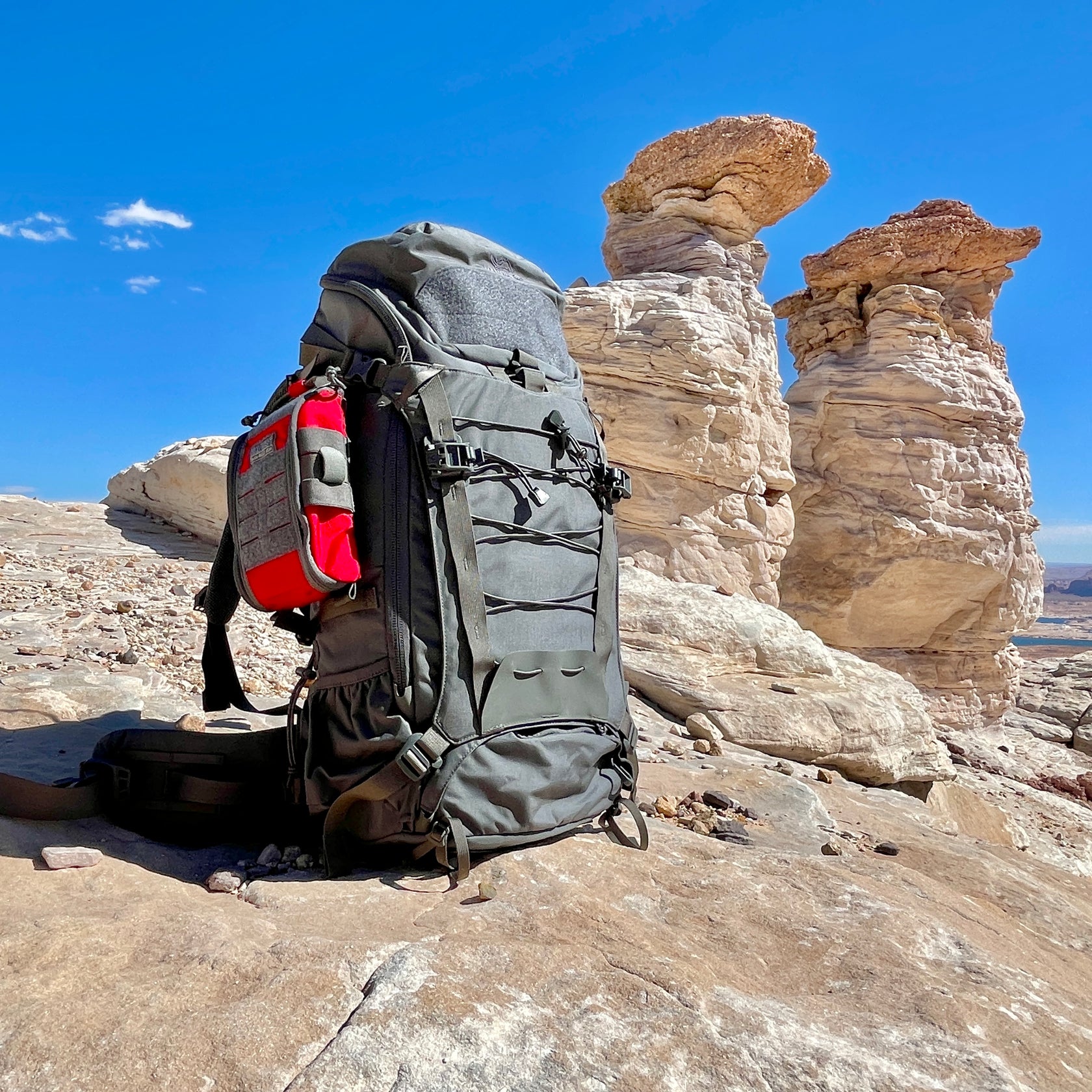


Tactical medicine is the discipline of delivering life-saving care in environments where the situation itself is still dangerous, unstable, or resource-limited. It grew out of hard lessons learned by military medics, and its core framework — Tactical Combat Casualty Care (TCCC) — has since reshaped how law enforcement officers, range safety officers, and prepared civilians respond to serious trauma. This guide is your hub for the whole subject: what TCCC actually teaches, how the MARCH sequence prioritizes care, and how to build and stage a tactical first aid kit for the range, a duty belt, or everyday carry.
One thing up front: tactical medicine is medical education, not tactics. Everything below is about recognizing life threats and treating them faster — the same skills that apply after a car wreck, a chainsaw accident, or an incident at a public event.
What Is Tactical Medicine? TCCC Origins in Plain English
Tactical Combat Casualty Care was developed in the 1990s after military researchers analyzed decades of battlefield fatality data and found a blunt truth: most preventable deaths came from a short list of injuries — above all, massive bleeding from the extremities. Conventional first aid at the time (airway first, bleeding later) was built for hospitals and highways, not for casualties who might bleed out in minutes.
TCCC flipped the priorities. Stop the deadliest bleeding first, use tourniquets aggressively and early, and match the level of care to the level of danger around you. Civilian medicine took notice: the same evidence base now drives the Stop the Bleed campaign, TECC (the civilian adaptation of TCCC), and the trauma protocols used by police, fire, and EMS across the country.
Phases of Care: Why Context Changes Everything
TCCC divides a response into phases, and the civilian-appropriate lesson translates cleanly:
- Direct threat / care under fire: While the scene is still actively dangerous, care is minimal — get yourself and the injured person away from the hazard, and address only catastrophic limb bleeding, ideally with a rapidly applied tourniquet. For a civilian, the "threat" is usually fire, traffic, an unstable structure, or an ongoing hazard. The principle is the same: you cannot help anyone if you become the second casualty.
- Indirect threat / tactical field care: Once you have relative safety — behind cover, out of the roadway, away from the hazard — you perform a deliberate, systematic assessment and treat what you find. This is where the MARCH sequence (below) lives.
- Evacuation care: Sustaining the casualty until they reach professional care. For civilians this means calling 911 early, monitoring the person, rechecking every intervention, and handing off clear information to EMS.
The takeaway for anyone building a kit: your equipment and training should serve those phases. A tourniquet you can reach with either hand serves the first phase. A staged, organized kit serves the second. Knowing how to communicate with EMS serves the third.
The MARCH Sequence: How Priorities Are Ordered
MARCH is the assessment order taught in TCCC and TECC. It exists because trauma kills on a schedule — massive arterial bleeding can be fatal in a few minutes, airway obstruction in slightly more, and so on. You treat the fastest killer first.
- M — Massive hemorrhage: Find and stop life-threatening bleeding immediately. Tourniquets for limbs; wound packing and direct pressure for junctional areas like the groin and armpit. Browse dedicated bleeding-control gear in our M – Massive Hemorrhage collection.
- A — Airway: Make sure the casualty can move air. Positioning and the recovery position handle most civilian scenarios.
- R — Respiration: Assess breathing and the chest. Open chest wounds get a vented chest seal; this is where a product like the HyFin Vent Compact Chest Seal twin pack earns its place in a kit — two seals, because penetrating trauma often has an entry and an exit.
- C — Circulation: Reassess bleeding control, check perfusion, and consider shock.
- H — Hypothermia & head injury: Trauma patients lose the ability to regulate body temperature, and cold blood does not clot well. Keep the casualty warm — even in Florida.
MARCH deserves its own deep dive, and we wrote one: see the full MARCH protocol guide for a step-by-step walkthrough of each letter, with the gear that supports it.
Range-Day Trauma Kits: The Most Common Real-World Use Case
If you shoot, a range trauma kit is not optional equipment — it is part of the sport, the same way eye and ear protection are. Ranges concentrate exactly the injury pattern TCCC was built for: penetrating trauma to limbs and torso, often minutes-to-hours away from a trauma center if the range is rural.

A serious range kit is built around a few non-negotiables:
- A genuine, current-generation tourniquet — the C-A-T Gen 7 is the most widely fielded windlass tourniquet in the world and the benchmark against which everything else is measured. Buy from an authorized dealer; counterfeit tourniquets fail at the worst possible moment.
- Hemostatic or plain compressed gauze for wound packing.
- A pressure bandage to hold packed wounds under continuous pressure.
- Vented chest seals (twin pack) for penetrating chest trauma.
- Trauma shears, gloves, and a marker — you cannot treat what you cannot see, and you must record tourniquet time.
Pre-assembled options save you sourcing each component: the AID-PAK Gen-2 packages a full bleeding-control loadout in a compact tear-open pouch that lives happily in a range bag, and our compact kits collection covers smaller and larger footprints. Not sure which kit matches your needs? The UMG kits comparison chart lays out contents side by side.

Two range-specific habits multiply the value of the kit: stage it visibly (on the bench or bag exterior, not buried under ammo), and brief your group. "Trauma kit is in the orange pouch, tourniquet on top" takes five seconds and can save five minutes.
Duty and Patrol Setups: The Law Enforcement IFAK
Officers face a distinct problem set: they must carry medical gear on a body already loaded with equipment, they are often first on scene at shootings and crashes, and the person they treat may be a partner, a subject, or themselves. A law enforcement IFAK has to answer three questions — what do I carry on my body, what stays in the vehicle, and can I reach the critical items with one hand?

The widely used answer is a tiered setup:
- On-body (tier 1): A tourniquet in a dedicated holder plus gloves, mounted on the duty belt or vest where either hand can reach it. This is self-aid gear — it treats the officer first.
- Vest or belt IFAK (tier 2): A tear-away pouch such as the Eleven 10 ETAK, which mounts to MOLLE or a belt and rips free so the whole kit can be handed off or brought to the casualty. Inside: tourniquet, packing gauze, pressure bandage, chest seals.
- Vehicle bag (tier 3): A larger kit with multiple tourniquets, more gauze, airway adjuncts appropriate to training level, and hypothermia management — the mass-casualty and prolonged-scene reserve.
Agencies outfitting multiple officers should standardize: same kit, same location on every officer, same contents. Under stress, an officer treating a partner should not have to search an unfamiliar vest. Our tactical gear collection and North American Rescue lineup cover the components; department quotes are available through the site.
Concealed-Carry Medical: The Gap Most People Ignore
There is an uncomfortable asymmetry in the concealed-carry world: many people carry a tool that can create a penetrating trauma wound, but nothing that can treat one. If your risk assessment justifies carrying a firearm, it justifies carrying a tourniquet — statistically, you are far more likely to use the medical gear. Car crashes, workplace accidents, and household injuries vastly outnumber defensive gun uses.
The constraint is real estate. A full IFAK does not fit in a waistband, so EDC medical is about ruthless prioritization: a flat-folded tourniquet in a pocket or ankle rig, a compact packing gauze, gloves. We built a dedicated walkthrough of the options — pocket loadouts, ankle kits, and off-body carry — in our EDC kit for concealed carry guide. Read it with one rule in mind: gear you actually carry every day beats a better kit that stays home.
Staging Your Gear: Belts, Plate Carriers, and MOLLE
Where you put medical gear matters as much as what you buy. The principles are consistent across platforms:
- Accessible to both hands. Assume one arm is the injury. Centerline or front-of-hip placement lets either hand reach the tourniquet; behind-the-back placement fails this test.
- One item, one place, always. Muscle memory only works if the tourniquet lives in the same spot on every belt, vest, and bag you own.
- Protected but fast. A tourniquet rubber-banded to MOLLE degrades in sunlight and snags on doorframes. A purpose-built carrier like the TQ1 tourniquet holder shields it from UV and abrasion while keeping the draw immediate, with room for trauma shears alongside.
- Marked for others. A visible cross or "MED" marker means a stranger can find your kit and treat you when you cannot self-report where it is.

On a plate carrier, the tear-away IFAK typically rides on the back panel or cummerbund with a pull handle reachable by either hand; on a belt, it sits opposite your dominant-side equipment. Pouches, holders, and mounting hardware live in our attachments and accessories collection.
Team Kits vs. Individual Kits: Who Carries What
TCCC doctrine draws a sharp line that civilians and agencies alike should copy: your IFAK is used on you. An individual first aid kit is sized to treat one casualty — its owner — and is positioned for self-aid. When you treat someone else, you use their kit first, preserving yours for the moment you need it.
Team or group kits sit on top of that baseline. A range bag kit, a patrol vehicle bag, a family trailhead pack, or a church safety-team bag serves multiple potential casualties, so it scales differently:
| Factor | Individual kit (IFAK) | Team / group kit |
|---|---|---|
| Sized for | One casualty — the owner | Multiple casualties |
| Tourniquets | 1 (plus 1 staged on body) | 3 or more |
| Carried | On the person, fixed location | Bag, vehicle, or fixed station |
| Extras | Bleeding control essentials only | Hypothermia wraps, extra gauze, airway adjuncts, boo-boo layer |
| Priority | Speed of access | Depth of supply |
A practical household or small-team standard: every trained person wears or pockets an individual bleeding-control kit, and one larger kit lives with the group. The comparison chart maps our kits to both roles.
Training Pathways: Gear Is the Second Purchase
A tourniquet without training is a paperweight with a windlass. The good news is that the training ladder is short, cheap at the entry level, and available almost everywhere:
- Stop the Bleed (60–90 minutes): The national entry point. Hands-on tourniquet application and wound packing. Often free through hospitals and fire departments.
- CPR / AED / basic first aid: Covers the medical emergencies that are far more common than penetrating trauma.
- TECC or civilian TCCC courses (1–2 days): The full MARCH framework, phase-of-care thinking, and scenario work under stress. The right level for range officers, security staff, and serious preparedness-minded civilians.
- First responder and beyond: EMR and EMT coursework for those who want depth, plus agency-specific tactical medicine programs for sworn officers.
Between courses, practice matters more than new purchases: quarterly self-application of your tourniquet with each hand, on a training-dedicated unit — never your carry tourniquet, which should stay pristine. Our education page tracks course resources and skill-building material, and new guides land regularly on this blog.
Related Reading
- Trauma First Aid: The Complete Bleeding Control Guide — the companion pillar on hemorrhage control technique.
- The MARCH Protocol Guide — letter-by-letter assessment walkthrough.
- UMG Kits Comparison Chart — every kit, side by side.
Frequently Asked Questions
Is TCCC training available to civilians?
Yes. TECC (Tactical Emergency Casualty Care) is the civilian adaptation, and many training companies run TCCC-based courses open to the public. For most people, the practical path is Stop the Bleed first, then a 1–2 day TECC or trauma-focused course.
What belongs in a range trauma kit at minimum?
A genuine current-generation tourniquet (such as the C-A-T Gen 7), compressed or hemostatic gauze, a pressure bandage, vented chest seals, gloves, trauma shears, and a marker. Everything else is useful; those items are the core.
Can I use my IFAK on someone else?
You can, but doctrine says use the casualty's kit first and keep yours as your own lifeline. If you regularly train or shoot with a group, a shared team kit solves the dilemma — nobody has to give up their personal gear.
Where should I mount a tourniquet on a duty belt or plate carrier?
Somewhere both hands can reach — centerline on a carrier or front-of-hip on a belt — in a dedicated holder that protects it from UV and snags. Consistency matters: same place on every rig you own.
How often should I replace tourniquets and kit contents?
Inspect quarterly. Replace any tourniquet that has been used for actual application or shows UV fading, fraying, or cracked components, and follow manufacturer guidance on dated items like hemostatic gauze and chest seals. Train on a separate, clearly marked training tourniquet.
Disclaimer: This article is for educational purposes only and is not a substitute for professional medical care or certified training. Seek qualified instruction (e.g., Stop the Bleed, TCCC) before relying on any trauma equipment.
Find similar articles:
bleeding control law enforcement IFAK MARCH protocol range trauma kit tactical first aid kit tactical medicine TCCCMentioned in this article
More stories

What Is TCCC? The Three Phases of Tactical Combat Casualty Care