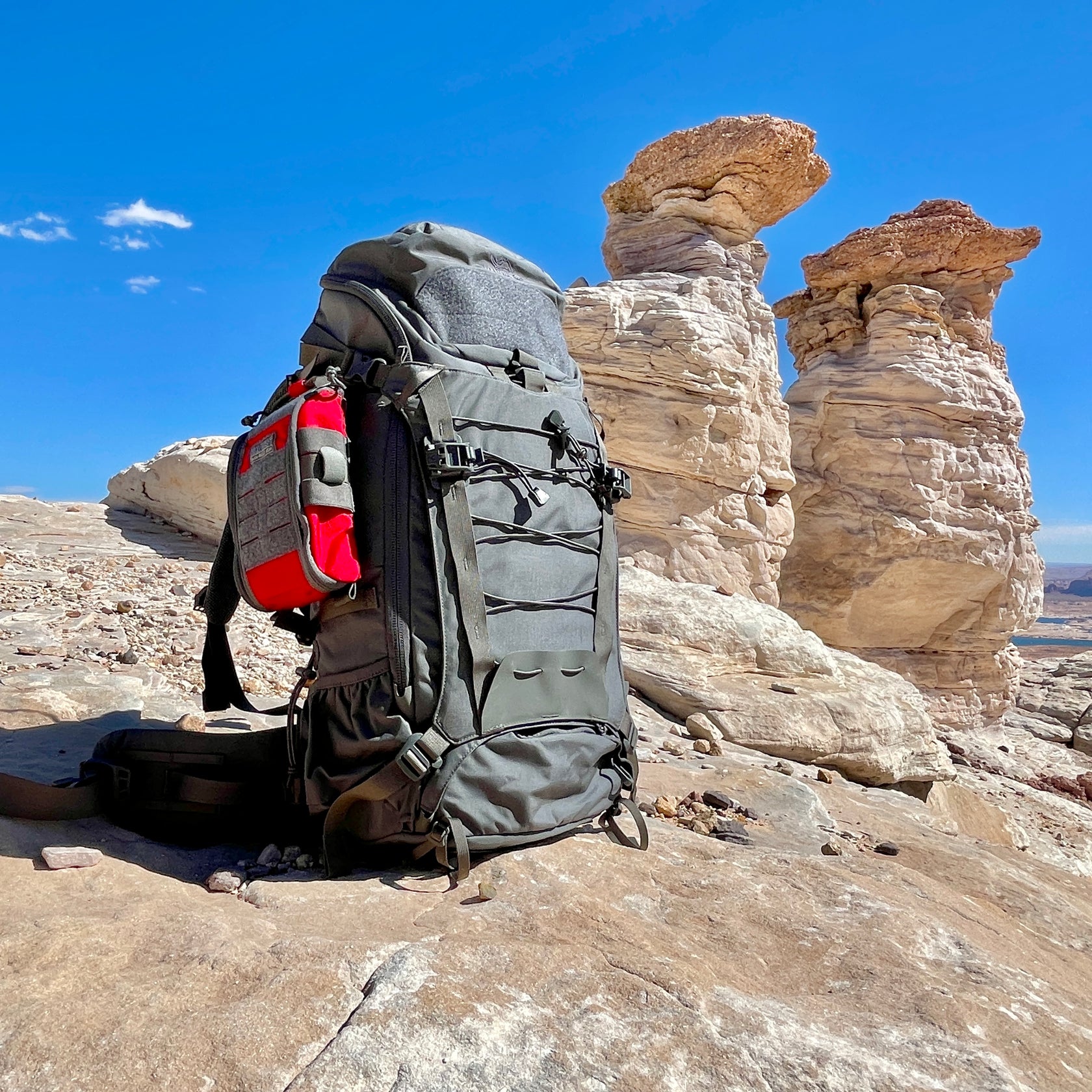


Flight Medic
Trauma Bag Setup
You know MARCH. You've run codes at 3,000 feet AGL in a shaking helicopter. You've intubated in a hover. You've packed junctional wounds while hanging out of a skid. And you've also felt the weight of your bag digging into your shoulder after a 12-hour shift, wishing you could cut 5 pounds without losing capability. This is the art of flight medic bag setup: maximizing capability while minimizing weight and space.
Ground EMS has room to spread out. You don't. Your bag setup has to account for weight limits, space limitations, vibration, altitude effects, and G-forces. Here's how experienced flight medics optimize their setup.
The Unique Challenges of Air Medical
Rotor Wing Constraints
Space limitations: You're working in 12-18 square feet, max
Vibration and noise: Fine motor skills degrade; communication is harder
Altitude effects: Supplies behave differently (expanding air in ET tube cuffs, IV bags)
G-forces: During takeoff, landing, and turbulence, everything becomes a projectile
Fixed-Wing Constraints
Pressurization effects: Air expands at altitude (gastric distension, ET tube cuffs)
Longer transports: You need supplies for 2-4 hour flights, not 20-minute ground runs
Limited resupply: Once you're airborne, you're it
High-Priority Items: What Differs From Ground EMS
1. Airway: Beyond the BVM
Weight-Saving Tip: One good video laryngoscope beats three backup direct laryngoscopes. The blade is the single point of failure — carry two blades, not two scopes.
2. Breathing: Chest Decompression at Altitude
Altitude Consideration: A pneumothorax at sea level becomes a tension pneumothorax at 5,000 feet. You need definitive management, not temporizing measures.
3. Circulation: Hemorrhage Control + Resuscitation
Weight-Saving Tip: If you carry blood, you don't need as much crystalloid. One unit of PRBCs replaces 3L of NS for hemorrhagic shock.
4. Disability: Neurological Monitoring
Why It Matters: Sedation creep is real on long flights. Objective monitoring prevents awareness during transport or accidental paralysis.
5. Exposure: Environmental Control
Altitude Consideration: Temperature drops 3.5°F per 1,000 feet. At 10,000 feet, it's 35°F colder than ground temp — even in a heated cabin.
Bag Organization Systems
Option 1: Modular Pouch System
Most Common
- Pouch 1: Airway (VL, blades, tubes, supraglottics, suction)
- Pouch 2: Breathing (chest seals, decompression, BVM, CPAP)
- Pouch 3: Circulation (TQs, gauze, IV/IO, blood)
- Pouch 4: Medications (organized by class)
- Pouch 5: Monitoring (glucometer, pupillometer, BIS)
- Pouch 6: Miscellaneous (burn sheets, blankets, tape)
Pros: Quick access, easy to restock, can grab individual pouches
Cons: More weight from multiple pouches
Option 2: Layered System
Weight-Optimized
- Top Layer: Tourniquets, chest seals, BVM, airway kit
- Middle Layer: IV supplies, medications, monitoring
- Bottom Layer: Burn sheets, extra blankets, backup equipment
Pros: Lighter (no pouches), everything in one place
Cons: Slower access to specific items, harder to restock
Option 3: Dual-Bag System
Specialized
- Trauma Bag: Hemorrhage control, airway, chest decompression, fluids/blood
- Medical Bag: Medications, monitoring, cardiac care, respiratory support
Pros: Optimized for specific call types, easier to grab right bag
Cons: Double the bags to maintain, potential to grab wrong bag
What Experienced Flight Medics Cut First
Redundant airways: One good VL + one supraglottic beats three different supraglottics
Excessive crystalloid: 1L NS + blood products > 3L NS alone
Full-size splints: SAM splints cut to size work for most extremities
Multiple medication boxes: Consolidate into one organized box
Paper charts: Switch to tablet-based documentation (if allowed)
Tourniquets: Always have at least 3
Chest seals: Always have at least 2 twin packs
Hemostatic gauze: Minimum 4 packages
Airway backup: Always have a surgical backup plan
Blood products: If your program carries them, never go without
Hypoxia and Altitude Considerations
Expanding Air
IV fluid bags: Will expand; may need to vent air periodically
Splints with air: SAM splints don't expand, but vacuum splints do
Stomach: Gastric distension worsens at altitude; NG tube early
Reduced Oxygen Partial Pressure
Supplemental O2: Always carry more than you think you need
Pulse oximetry: Less reliable at altitude; correlate with clinical picture
Temperature Effects
Fluid warming: Cold fluids = hypothermic patient
Battery life: Batteries die faster in cold; carry spares in warm pockets
The Bottom Line
Your trauma bag is your lifeline in the air. It needs to be light enough to carry, organized enough to use under stress, and comprehensive enough to handle anything.
There's no perfect setup. There's only the setup that works for your aircraft, your program, and your call volume.
Build it. Test it. Cut what doesn't work. Add what does. And when you're hanging out of a skid at 5,000 feet with a bleeding patient, you'll be glad you did.
Flight Medic Kits
Configurable for rotor and fixed-wing, used by air medical programs nationwide.
Related: shop the FATPack-PRO Large, browse medical backpacks, or learn the MARCH protocol.
Mentioned in this article
More stories

Building a Law Enforcement Blowout Kit: Beyond the Duty Belt